AI Testing
OpenAI API Testing Guide: Automate GPT-4 Tests with Python
Building applications on top of the OpenAI API — GPT-4, GPT-4o, embeddings, DALL-E — requires a solid test strategy.

AI-powered testing guides — how to use AI to generate, run, and maintain automated tests faster.
AI Testing
Building applications on top of the OpenAI API — GPT-4, GPT-4o, embeddings, DALL-E — requires a solid test strategy.

AI Testing
Testing LLM-powered applications is one of the most misunderstood areas of software quality.
AI Testing
Every production application that calls OpenAI, Anthropic, or Google Gemini will eventually hit a rate limit.

AI Testing
Calling the real OpenAI, Claude, or Gemini API in every test is slow, expensive, and non-deterministic.

AI Testing
Google's Gemini API powers everything from simple text generation to multimodal applications that process images, audio, and documents.

AI Testing
Testing AI APIs requires a different mindset than testing traditional REST endpoints.

AI Testing
Deploying an LLM-powered application without safety testing is shipping code without security review.

AI Testing
The most common source of production failures in LLM applications isn't a bad answer — it's a bad format.

AI Testing
Measuring the quality of a large language model output is fundamentally different from measuring traditional software behavior.
AI Testing
When a model release announces "state-of-the-art on MMLU" or "beats GPT-4 on HumanEval," how much should you care?
AI Testing
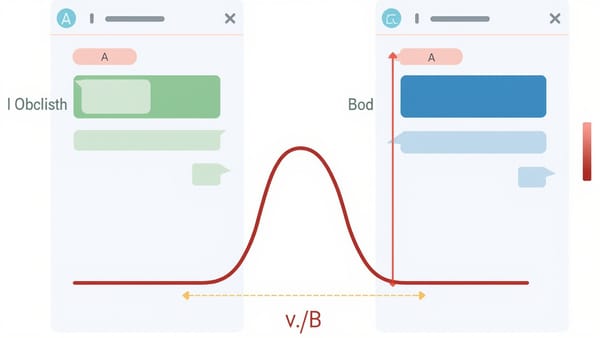
"The new prompt feels better" is not an evaluation strategy. Moving from GPT-4 to Claude, or changing a system prompt, requires rigorous A/B testing to make confident decisions — especially when the differences in quality are subtle and user impact is significant. This guide covers the statistical

AI Testing
Deploying an LLM is not a one-time event. Prompts change. Models get updated. Retrieval indexes get refreshed.