You Don't Know When Your Site Is Broken
Your site went down Friday night. You found out Monday morning. Here's how to know in two minutes instead of two days.
The gap between "it broke" and "you know about it" is where money disappears. For some businesses, that gap is two days. For others, it's two minutes. The difference is whether someone is watching your site 24/7.
HelpMeTest Watches Your Site
HelpMeTest visits your site every few minutes, the same way a customer would. It opens the page. If the page loads, everything is fine. If it doesn't load, or loads with an error, you get a message immediately—email, Slack, whatever you use. You know your site is down while you can still fix it and save the weekend, not after you've already lost it.
This isn't magic. It's just someone checking your site every five minutes instead of you checking it once a day and hoping for the best.
Setting It Up
HelpMeTest connects to the AI tool you already use to build your site—Cursor, Claude, Windsurf, Bolt, or any tool that supports MCP (Model Context Protocol). It gives your AI the ability to open a real browser and check if your site is working.
Open your terminal and paste this:
That installs HelpMeTest on your machine. Takes about 10 seconds.
Next, grab your personal token from the Settings page and run this:
This connects HelpMeTest to your AI editor. It figures out which editor you're using (Cursor, Windsurf, Claude Desktop, VS Code, etc.) and sets everything up automatically.
Restart your editor. That's it. Setup done.
Check That It Worked
Open your AI editor and ask it: "What HelpMeTest tools do you have?"
Your AI should respond with a list of things it can now do—create checks, run checks, see check status, open interactive browser sessions. If you see that list, you're connected.
Your First Check
Tell your AI to check your homepage:
HelpMeTest opened a real Chrome browser in the cloud, navigated to your site, confirmed it loaded, and saved it as a check. That check now runs automatically every 5 minutes. If your site goes down, you get alerted immediately.
Check the Important Pages
Your homepage loading doesn't mean your whole site works. Check the pages that matter for your business:
Now you're monitoring the pages customers actually use. If checkout breaks but your homepage works, you'll still know within minutes.
SSL Certificate Check
Your site can load perfectly but have an expired SSL certificate. Browsers show scary warnings and customers leave. Add an SSL check:
You'll get warned before your certificate expires, not after customers start seeing errors.
What You Just Built
Your Monitoring Dashboard
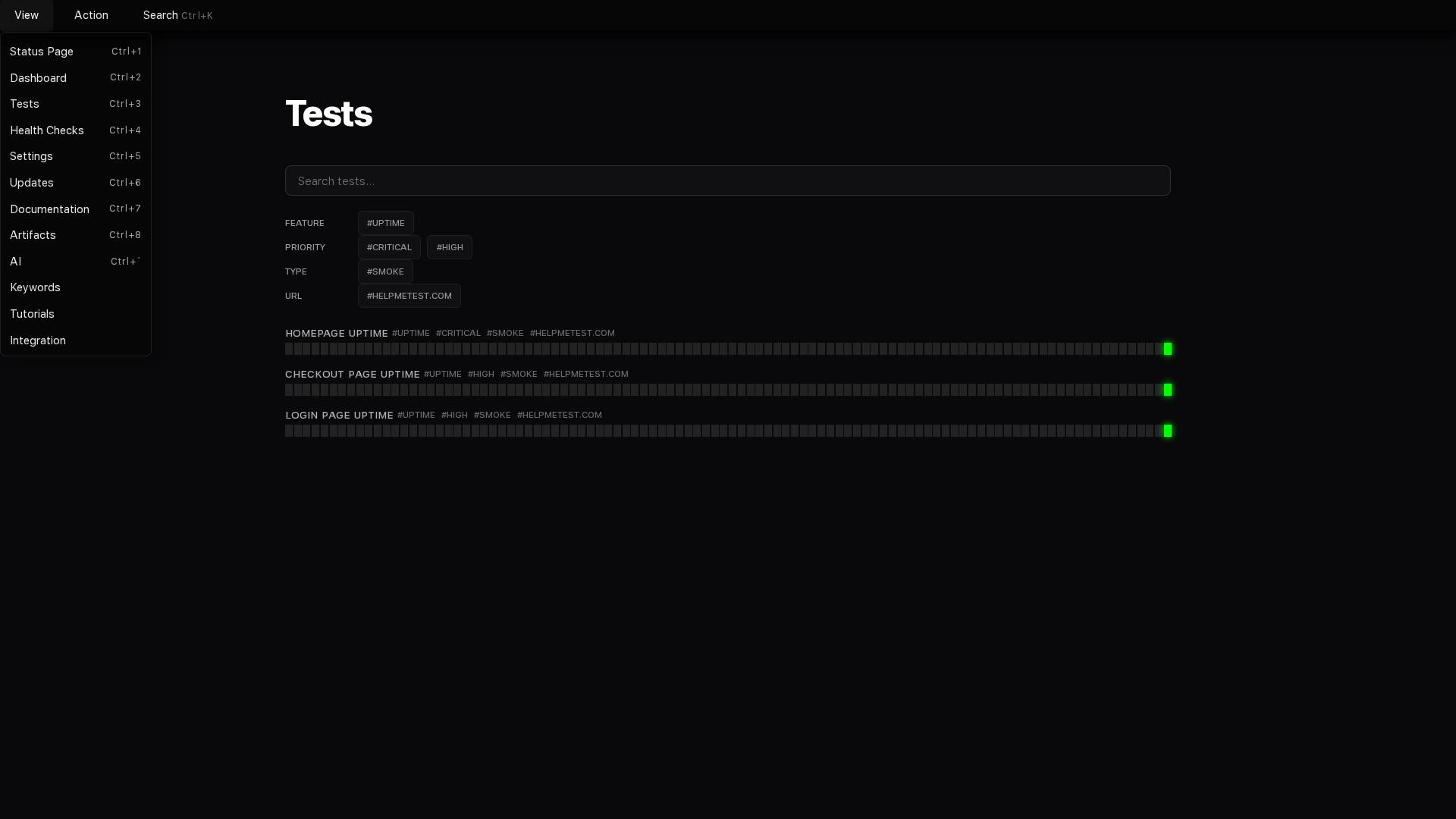
You have three checks running automatically:
- Homepage Uptime (every 5 minutes)
- Checkout Page Uptime (every 5 minutes)
- Login Page Uptime (every 5 minutes)
Each check shows a timeline of green squares—every square is a successful run. If your site is up, the checks pass silently. If your site goes down, the check fails (shows red) and you get alerted immediately. You can see the history of every check run on your Checks page—green means it passed, red means it failed. A wall of green means your site has been solid. Red showing up means something broke and you got alerted.
The Difference This Makes
Before: Your site goes down Friday at 11 PM. You don't know. Customers see errors all weekend. Monday morning you get an angry email. You fix it, but you have no idea how many people tried to visit and left. The damage is already done.
After: Your site goes down Friday at 11 PM. You get an alert at 11:05 PM. You fix it before you go to bed. Total downtime: 8 minutes. Most customers never even noticed.
That's what monitoring is. It doesn't prevent problems—nothing can. It just makes sure you find out about them fast enough to do something.
This is basic uptime monitoring. Your pages load or they don't. Your certificate is valid or it's not. But most site problems aren't this simple. Most problems are "the site loads but checkout is broken" or "the homepage works but search returns nothing" or "desktop works but mobile has an error." That's where the real money disappears—when your site looks fine but the part that makes you money is quietly broken.