Multi-Tenant Isolation Testing: Ensuring Data Never Leaks Between Tenants

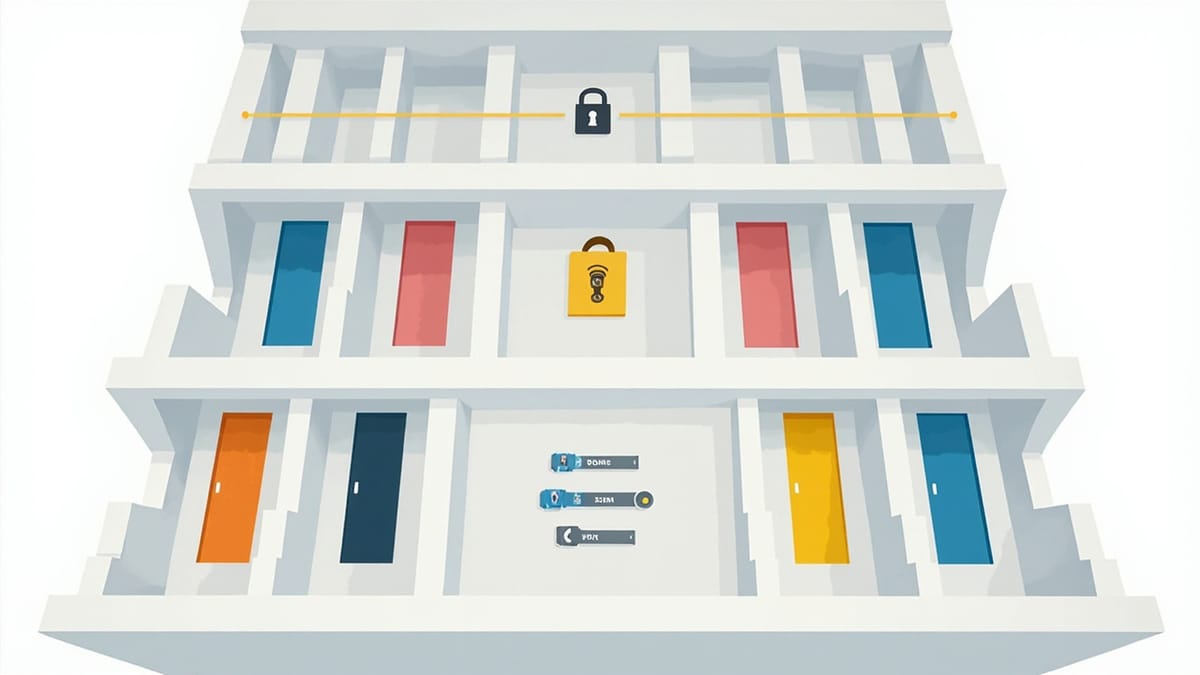
Multi-tenant SaaS applications carry a unique risk that single-tenant apps simply don't face: one misconfigured query, one missing WHERE clause, and Tenant A is reading Tenant B's data. The consequences range from embarrassing to catastrophic. Yet isolation testing is frequently underdeveloped — teams rely on "it worked in dev" rather than systematic verification.
This guide covers the concrete test patterns you need: row-level security validation, schema isolation checks, and API boundary tests that prove your tenant walls actually hold.
Why Isolation Bugs Are So Dangerous
Isolation failures are particularly insidious because they often go undetected in normal usage. A tenant seeing their own data passes every happy-path test. The failure only surfaces when:
- A query accidentally omits the tenant filter
- A caching layer returns a result from a different tenant's request
- A background job processes records without scoping them to the correct tenant
- An admin endpoint bypasses the tenant middleware
By the time you discover the leak, data may have been exposed for days or weeks.
Row-Level Security Testing
Row-level security (RLS) is the most common isolation mechanism in multi-tenant databases. Whether you implement it in the application layer, the ORM, or the database itself (PostgreSQL's native RLS), you need tests that verify it works at every level.
The Basic Isolation Test Pattern
The core pattern is simple: create two tenants, create data under each, then verify neither can access the other's data.
Setup:
  - Create Tenant A with test record (id: record-a-1)
  - Create Tenant B with test record (id: record-b-1)

Test: Tenant A cannot read Tenant B's record
  - Authenticate as Tenant A
  - GET /api/records/record-b-1
  - Assert: 404 Not Found (not 403, not the actual record)

Test: Tenant A cannot list Tenant B's records
  - Authenticate as Tenant A
  - GET /api/records
  - Assert: response contains record-a-1
- Assert: response does NOT contain record-b-1The distinction between 404 and 403 matters. Returning 403 Forbidden confirms to the attacker that the resource exists — you've leaked information. A well-implemented RLS layer returns 404 because from Tenant A's perspective, Tenant B's records simply don't exist.
Testing ORM-Level Scoping
If you use an ORM with tenant scoping middleware (like a global scope in Rails, or a middleware that injects tenant context), test that the scope is applied even when developers bypass the normal query path.
Focus on:
- Direct model queries (not going through your service layer)
- Bulk operations (updates, deletes that accept arrays of IDs)
- Aggregate queries (COUNT, SUM — do these include cross-tenant records?)
- Joins and eager loading (does joining a related table break tenant scoping?)
PostgreSQL Native RLS Tests
If you use PostgreSQL's built-in row-level security, you can test at the database level directly:
-- Set up test
SET app.current_tenant = 'tenant-a';

-- This should return only tenant-a records
SELECT count(*) FROM records;

-- Switching tenant context changes what's visible
SET app.current_tenant = 'tenant-b';
SELECT count(*) FROM records; -- different countWrite database-level tests that switch the tenant context variable and verify the record sets change appropriately. This tests your RLS policies independently of your application code.
Schema Isolation Testing
Some multi-tenant architectures use separate schemas per tenant (common in PostgreSQL) rather than a shared schema with tenant columns. This provides stronger isolation but introduces different failure modes.
Schema Routing Tests
Verify that requests are routed to the correct schema:
Test: Write to tenant schema routes correctly
  - Set tenant context to tenant-a
  - INSERT a record
  - Query public.records (shared schema) — record should NOT appear
  - Query tenant_a.records (tenant schema) — record SHOULD appear
  - Switch context to tenant-b
- Query tenant_b.records — record should NOT appearMigration Consistency Tests
When you run migrations across multiple tenant schemas, you need confidence that all schemas are in sync. Test that:
- All tenant schemas have the same table structure (column names, types, indexes)
- No tenant schema is missing a migration that others have
- Schema version tracking is accurate
A practical approach: after every migration run, query the information_schema across all tenant schemas and compare the structure. Any divergence is a bug.
Connection Pool Isolation
Schema-per-tenant architectures often use connection poolers that set the search_path. Test that:
- Concurrent requests from different tenants don't interfere
- The search_path is set correctly at the start of each request
- Long-running transactions don't hold a connection with the wrong search_path
API Boundary Testing
Application-layer isolation needs testing at the API surface. This is where most teams focus, but the tests are often too shallow.
ID Enumeration Attacks
Don't just test "Tenant A can't access Tenant B's specific known record." Test the full ID space:
Test: Sequential ID enumeration
  - Authenticate as Tenant A
  - Collect all record IDs visible to Tenant A (e.g., 1001, 1002, 1003)
  - Attempt to access IDs outside this range (1000, 999, 998)
  - Assert: all return 404

Test: UUID guessing (if applicable)
  - If records use UUIDs from Tenant B's data set
  - Attempt access with known Tenant B UUIDs
- Assert: all return 404Indirect Object References
Test endpoints that accept related object IDs as parameters:
Scenario: Tenant A submits a report using Tenant B's template ID
  - Tenant B has template with id: template-b-1
  - Authenticate as Tenant A
  - POST /api/reports { template_id: "template-b-1" }
- Assert: 400 Bad Request or 404 (not a report using Tenant B's template)This pattern catches bugs where the tenant check happens on the primary resource but not on referenced resources.
Batch Endpoint Testing
Bulk endpoints are a common source of isolation failures:
Test: Batch delete with cross-tenant IDs
  - Tenant A owns records [a1, a2, a3]
  - Tenant B owns records [b1, b2]
  - Authenticate as Tenant A
  - DELETE /api/records { ids: ["a1", "b1"] }
  - Assert: only a1 is deleted
- Assert: b1 still exists (query as Tenant B to verify)Testing Background Jobs and Async Processing
Background jobs that process data are a frequent source of isolation bugs. They often run outside the normal request/response cycle, where tenant middleware may not apply.
Job Scoping Tests
For each background job type:
- Enqueue a job with a specific tenant context
- Verify the job only processes records for that tenant
- Verify the job's output is stored under the correct tenant
Queue Isolation
If you use separate queues per tenant, test that:
- High-volume tenants can't starve low-volume tenants' queues
- Job failures in one tenant's queue don't affect other tenants
- Dead letter queues are tenant-scoped
Setting Up Isolation Tests with HelpMeTest
Browser state persistence makes isolation testing significantly less painful. With HelpMeTest, you can save authenticated sessions for multiple tenant accounts and reuse them across your isolation test suite — no repeated login flows, just switching between saved states and verifying the boundaries hold.
Set up health checks that run isolation probes on a schedule: authenticate as Tenant A and attempt to access a known Tenant B resource every 15 minutes. If that request ever returns 200 instead of 404, you get an alert before your customers notice.
Common Isolation Testing Mistakes
Testing only the happy path. Most isolation tests only verify that Tenant A can access their own data. They skip the verification that Tenant A cannot access Tenant B's data.
Not testing after refactors. Isolation bugs frequently appear after "innocent" refactors — extracting a query into a shared utility, adding a new index, changing the ORM version. Run isolation tests in CI on every merge.
Trusting the framework. Multi-tenancy middleware in frameworks like Django (django-tenants) or Rails (acts_as_tenant) can be bypassed. Test that your specific usage is correctly scoped, not just that the library is installed.
Missing the admin paths. Admin and internal endpoints often bypass tenant middleware by design. Verify that these endpoints require elevated privileges and that regular tenant users cannot access them.
Not testing tenant creation and deletion. When a tenant is deleted, do their records get cleaned up? When a new tenant is created, do they accidentally inherit any data from a previous tenant who used the same slug?
Building a Systematic Isolation Test Matrix
Rather than writing ad-hoc isolation tests, build a matrix:
| Resource | List | Read | Write | Delete | Batch |
|---|---|---|---|---|---|
| Records | ✓ | ✓ | ✓ | ✓ | ✓ |
| Templates | ✓ | ✓ | ✓ | ✓ | — |
| Users | ✓ | ✓ | ✓ | ✓ | — |
| Reports | ✓ | ✓ | ✓ | ✓ | ✓ |
For each cell, write at least one cross-tenant test. This gives you coverage completeness and makes it immediately obvious when a new resource type isn't covered.
Conclusion
Multi-tenant isolation testing isn't glamorous, but it's among the highest-leverage testing you can do. A single isolation failure can compromise your entire customer base and end a SaaS company overnight.
The pattern is consistent: create two tenants, operate as one, verify the other's data is invisible. Apply this to every layer — database, ORM, API, background jobs, caches, and exports. Build it into CI so it runs on every commit. Then monitor it continuously in production.
Your customers trust you with their data. Isolation tests are how you prove that trust is justified.