What Is Shift-Left Testing? The Definitive Guide for 2026
Bugs found in production cost 100x more to fix than bugs caught during development.

Bugs found in production cost 100x more to fix than bugs caught during development. That single fact is the entire argument for shift-left testing — and it's why every serious engineering team is rethinking when quality happens.
What Is Shift-Left Testing?
Shift-left testing is the practice of moving testing activities earlier ("left") in the software development lifecycle. Instead of treating QA as a gate at the end of development, shift-left integrates testing from the very beginning — during requirements, design, and coding.
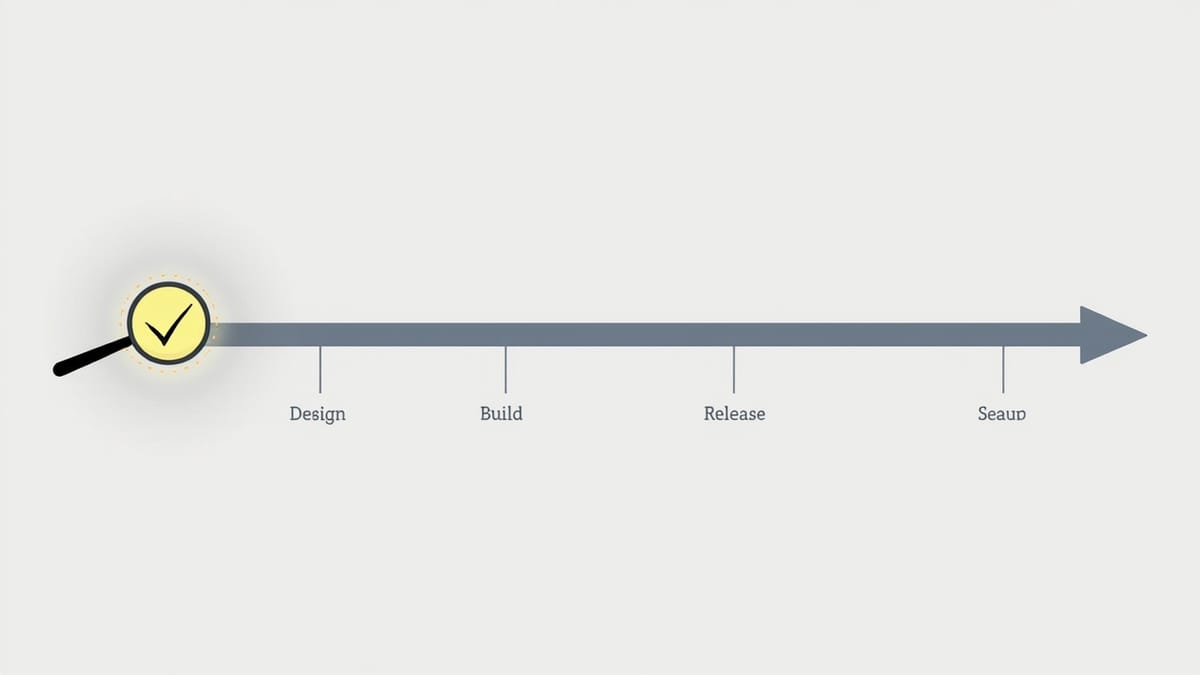
The term comes from reading a project timeline left to right: design → development → testing → deployment. "Shifting left" means sliding the testing arrow toward the start.
The Traditional (Shift-Right) Model
In a traditional waterfall or even early agile teams, the sequence looks like this:
- Requirements written
- Code written
- Code handed to QA
- QA tests (and finds bugs)
- Bugs returned to developers
- Developers fix bugs
- QA retests
- Release (if time allows)
This creates a predictable crisis: bugs pile up at the end, testers become the bottleneck, and releases slip. Worse, fixing a bug at step 4 requires a developer to context-switch back to code they wrote weeks ago — expensive and error-prone.
The Shift-Left Model
Shift-left flips this dynamic:
- Requirements reviewed for testability before development starts
- Developers write tests before or alongside code (TDD)
- Automated tests run on every commit
- QA is involved in design discussions, not just validation
- Integration and regression testing happen continuously
- End-to-end scenarios are automated, not manual
The result: bugs are caught within minutes of being introduced, not weeks later.
Why Shift-Left Testing Matters in 2026
Several trends have made shift-left not just preferable but necessary:
Continuous delivery pressure. Teams shipping multiple times per day cannot afford a two-week QA cycle. Testing must happen in minutes, not weeks.
Microservices complexity. Modern applications are distributed systems. A bug in one service can manifest as a failure in another. Catching integration issues early is critical.
AI-accelerated development. As AI coding tools generate code faster, the gap between "code written" and "code tested" widens — unless testing is automated and integrated.
Cloud infrastructure costs. Bugs in production don't just cost developer time. They cost you customers, reputation, and incident response hours.
The Four Levels of Shift-Left Testing
Shift-left isn't a single practice — it's a spectrum:
Level 1: Unit Test First
Developers write unit tests before or alongside production code. Each function is tested in isolation. Fast, cheap, and catches logic errors immediately.
Tools: Jest, pytest, JUnit, RSpec
Level 2: Component and Integration Testing in CI
Automated tests run on every pull request. Integration tests verify that components work together. Failing tests block merges.
Tools: GitHub Actions, GitLab CI, CircleCI
Level 3: Contract Testing
In microservice architectures, teams define API contracts between services and test against them independently. No need to spin up the full stack to catch breaking changes.
Tools: Pact, Spring Cloud Contract
Level 4: End-to-End Testing in the Pipeline
Browser-based and API tests run automatically against staging environments as part of the deployment pipeline. Catch user-facing bugs before production.
Tools: Playwright, Robot Framework, HelpMeTest
Shift-Left Testing Practices
Test-Driven Development (TDD)
Write the test first, then write the code to make it pass. This forces you to think about the interface and behavior before implementation. Side effect: you always have test coverage.
Behavior-Driven Development (BDD)
Write tests in plain English that non-technical stakeholders can read and approve. Bridges the gap between requirements and implementation.
Given a user is logged in
When they add an item to the cart
Then the cart count increases by 1Static Analysis and Linting
Catch potential bugs before code even runs. Type checkers, linters, and security scanners can run in seconds and prevent entire classes of bugs.
Shift-Left Security (DevSecOps)
Security scanning integrated into the pipeline. Dependency vulnerability checks, SAST tools, and secret detection run on every commit — not as a separate security review.
Continuous Integration
Every commit triggers the full test suite. "Works on my machine" disappears because the CI environment is consistent and shared.
How HelpMeTest Enables Shift-Left
HelpMeTest brings end-to-end test automation into the shift-left workflow without requiring code:
AI-powered test generation. Describe a user flow in plain English and HelpMeTest generates the test. No Playwright expertise required.
Self-healing tests. When your UI changes, tests update automatically rather than breaking and blocking your pipeline.
CI/CD integration. Tests run automatically on every deployment. Failing tests surface in your PR before merge.
24/7 monitoring. Shift-left doesn't mean you ignore production. HelpMeTest monitors your live site continuously and alerts you to regressions.
At $0.003 per test run with no per-seat pricing, teams can automate every critical user flow without cost discouraging coverage.
Common Shift-Left Testing Mistakes
Mistake 1: Only Shifting Unit Tests Left
Unit tests are fast but don't catch integration failures. You need a mix — unit, integration, and end-to-end tests, all running early.
Mistake 2: Ignoring Non-Functional Requirements
Performance, security, and accessibility are also testable. Shift them left too. A 10-second page load caught in development is much cheaper than a post-launch optimization sprint.
Mistake 3: No Test Ownership
"QA owns testing" is the old model. In shift-left, developers own unit and integration tests, QA owns end-to-end scenarios, and the whole team owns quality. Define ownership explicitly.
Mistake 4: Tests That Don't Run
Tests that are skipped, flaky, or only run manually provide false confidence. Every test in your suite should run on every commit and must be green to merge.
Mistake 5: Testing After Requirements Are Locked
Shift-left starts before code. QA should review requirements for ambiguity, testability, and edge cases. "Test by example" — concrete scenarios written alongside requirements — is one of the highest-ROI practices available.
Measuring Shift-Left Success
Track these metrics before and after implementing shift-left:
- Mean time to detection (MTTD): How long from bug introduction to discovery? Should drop significantly.
- Defect escape rate: Percentage of bugs found in production vs. development. Target: < 10% in production.
- Test execution time: End-to-end suite runtime. Should stay under 10 minutes for blocking tests.
- Cost per defect: Bugs caught in dev are ~$80 to fix. Bugs in production are ~$8,000.
- Deployment frequency: Teams that shift left deploy more often because they trust their tests.
Getting Started
You don't have to transform everything at once. A pragmatic shift-left roadmap:
Week 1: Add linting and static analysis to CI. Zero effort to run, immediate value.
Week 2: Require unit tests for all new code. Don't retrofit — just start now.
Month 1: Automate your three most common user flows as end-to-end tests. Run them in CI.
Month 2: Add integration tests for your critical APIs and service boundaries.
Quarter 2: Shift security scanning left. Add dependency vulnerability checks and SAST.
Quarter 3: Measure defect escape rate. Adjust where you're catching bugs vs. where you want to be.
Conclusion
Shift-left testing isn't about finding QA work to do earlier — it's about building quality into the development process itself. When testing is continuous, automated, and integrated from the start, bugs become cheap to fix, releases become predictable, and developers spend more time building features and less time debugging production fires.
The teams winning in 2026 aren't faster because they skip testing. They're faster because they test earlier, automatically, and continuously.
Start automating your end-to-end tests with HelpMeTest — start a free trial.