
Testing with Service Meshes: Istio and Linkerd for Microservices QA

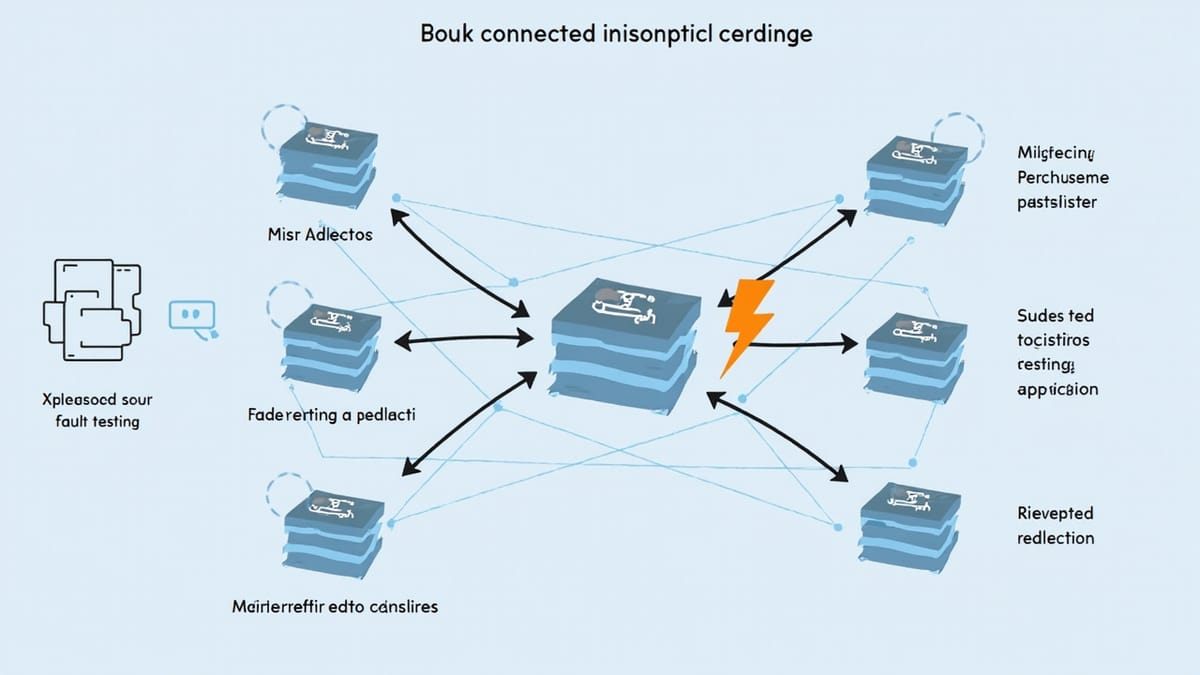
Service meshes like Istio and Linkerd add a powerful layer of infrastructure between your microservices: traffic management, mTLS encryption, observability, and resilience features. But they also add complexity to testing. A service that works fine in unit tests may behave unexpectedly when running behind a mesh proxy.
This guide covers how to test effectively in service mesh environments — and how to use mesh capabilities to improve your tests.
What Service Meshes Add to Your Test Concerns
When you add a service mesh, you inherit new testing responsibilities:
mTLS between services — all communication is encrypted and mutually authenticated. Services that work without authentication may fail when mTLS is enforced.
Sidecar proxy behavior — requests go through an Envoy (Istio) or Linkerd proxy before reaching your service. The proxy can modify headers, retry requests, and apply circuit breakers.
Traffic policies — destination rules, virtual services, and traffic weights affect which service instance receives requests.
Observability — the mesh automatically generates metrics, traces, and access logs. You should verify these work correctly in test environments.
Setting Up a Local Mesh for Testing
Istio on Kind (Local Kubernetes)
# Create a local cluster
kind create cluster --name test

# Install Istio
istioctl install --set profile=minimal -y

# Enable sidecar injection for your namespace
kubectl label namespace default istio-injection=enabled

# Deploy your services
kubectl apply -f k8s/

# Verify sidecars are injected
kubectl get pods
# NAME                           READY
# order-service-xxx              2/2    <- 2 containers = app + sidecar
# payment-service-xxx 2/2Lightweight Alternative: Linkerd
Linkerd has a smaller footprint and is easier to set up for testing:
# Install Linkerd CLI
curl --proto '=https' --tlsv1.2 -sSfL https://run.linkerd.io/install | sh

# Install Linkerd in cluster
linkerd install --crds | kubectl apply -f -
linkerd install | kubectl apply -f -
linkerd check

# Inject your deployments
kubectl get deploy -o yaml | linkerd inject - | kubectl apply -f -Testing mTLS Enforcement
Verify mTLS Is Active
# Istio: check if mTLS is enforced between services
kubectl exec -it order-service-xxx -c istio-proxy -- \
  pilot-agent request GET /config_dump | \
  python3 -c "import sys,json; d=json.load(sys.stdin); \
  print([c for c in d['configs'] if 'tls_context' in str(c)][:1])"

# Linkerd: check mTLS status
linkerd viz edges deploy
# Output shows which connections are secured with mTLSTest That Plaintext Is Rejected
def test_direct_connection_rejected_when_mtls_enforced():
    """Services should not accept plaintext when mTLS strict mode is enabled."""
    import ssl
    import http.client

    # Attempt plaintext connection directly to service pod IP
    pod_ip = get_pod_ip('payment-service')
    conn = http.client.HTTPConnection(pod_ip, 8080, timeout=5)

    try:
        conn.request('GET', '/health')
        response = conn.getresponse()
        # If we get here, mTLS is not enforced
        pytest.fail(f"Expected connection refused but got {response.status}")
    except (ConnectionRefusedError, http.client.RemoteDisconnected):
pass # Expected: plaintext rejectedVerify Certificate Rotation
# Istio: check certificate expiry
kubectl exec deploy/order-service -c istio-proxy -- \
  openssl s_client -connect payment-service:8080 \
  -cert /var/run/secrets/workload-spiffe-credentials/certificates.pem \
  -key /var/run/secrets/workload-spiffe-credentials/private_key.pem 2>/dev/null | \
openssl x509 -noout -datesFault Injection Testing with Istio
Istio's VirtualService can inject faults into traffic — without touching your application code. This is powerful for testing how your services handle failures from dependencies.
Inject HTTP Errors
# fault-injection-payment.yaml
apiVersion: networking.istio.io/v1alpha3
kind: VirtualService
metadata:
  name: payment-service-fault
spec:
  hosts:
    - payment-service
  http:
    - fault:
        abort:
          httpStatus: 500
          percentage:
            value: 100
      route:
        - destination:
host: payment-servicedef test_order_service_handles_payment_failure():
# Apply fault injection
apply_manifest('fault-injection-payment.yaml')
try:
response = requests.post('http://order-service/checkout', json=order_data)
# Order service should return 503, not 500
assert response.status_code == 503
assert response.json()['error'] == 'payment_unavailable'
# Verify order was not created
order_count = db.orders.count()
assert order_count == 0
finally:
delete_manifest('fault-injection-payment.yaml')Inject Latency
# latency-injection.yaml
apiVersion: networking.istio.io/v1alpha3
kind: VirtualService
metadata:
  name: inventory-service-slow
spec:
  hosts:
    - inventory-service
  http:
    - fault:
        delay:
          fixedDelay: 5s
          percentage:
            value: 100
      route:
        - destination:
host: inventory-servicedef test_checkout_timeout_when_inventory_slow():
apply_manifest('latency-injection.yaml')
try:
start = time.time()
response = requests.post('http://order-service/checkout', json=order_data)
elapsed = time.time() - start
assert response.status_code == 503
assert elapsed < 3.0, f"Timeout took too long: {elapsed}s" # Should timeout before 5s
finally:
delete_manifest('latency-injection.yaml')Partial Failure Testing
# intermittent-failures.yaml — 30% error rate
fault:
  abort:
    httpStatus: 503
    percentage:
value: 30def test_retry_policy_handles_intermittent_failures():
"""With 30% error rate, retries should ensure >95% success rate."""
apply_manifest('intermittent-failures.yaml')
try:
results = [
requests.post('http://order-service/checkout', json=order_data).status_code
for _ in range(100)
]
success_rate = results.count(200) / len(results)
assert success_rate > 0.95, f"Success rate {success_rate:.1%} too low — retries not working"
finally:
delete_manifest('intermittent-failures.yaml')Traffic Shaping for Canary Testing
Use Istio to split traffic between service versions during testing:
# canary-deployment.yaml
apiVersion: networking.istio.io/v1alpha3
kind: VirtualService
metadata:
  name: order-service
spec:
  hosts:
    - order-service
  http:
    - route:
        - destination:
            host: order-service
            subset: stable
          weight: 90
        - destination:
            host: order-service
            subset: canary
          weight: 10
---
apiVersion: networking.istio.io/v1alpha3
kind: DestinationRule
metadata:
  name: order-service
spec:
  host: order-service
  subsets:
    - name: stable
      labels:
        version: stable
    - name: canary
      labels:
version: canarydef test_canary_receives_expected_traffic_share():
"""Verify ~10% of traffic routes to canary."""
results = {'stable': 0, 'canary': 0}
for _ in range(200):
response = requests.get('http://order-service/version')
version = response.json()['version']
results[version] = results.get(version, 0) + 1
canary_rate = results['canary'] / sum(results.values())
assert 0.05 < canary_rate < 0.20, \
f"Canary rate {canary_rate:.1%} outside expected range 5-20%"Testing Circuit Breakers
Configure circuit breakers via Istio's DestinationRule:
apiVersion: networking.istio.io/v1alpha3
kind: DestinationRule
metadata:
  name: payment-circuit-breaker
spec:
  host: payment-service
  trafficPolicy:
    outlierDetection:
      consecutive5xxErrors: 5
      interval: 10s
baseEjectionTime: 30sdef test_circuit_breaker_opens_after_failures():
"""After 5 consecutive errors, requests should fail fast without hitting payment-service."""
# Force payment service to return errors
apply_fault_injection(service='payment-service', error_rate=100)
# Make enough requests to trip the circuit breaker
for _ in range(10):
requests.post('http://order-service/checkout', json=order_data)
# Remove fault injection — payment service is now healthy
remove_fault_injection('payment-service')
# Circuit breaker should still be open — requests fail fast
start = time.time()
response = requests.post('http://order-service/checkout', json=order_data)
elapsed = time.time() - start
assert response.status_code in (503, 429)
assert elapsed < 0.1, "Circuit breaker should fail fast, not wait for timeout"
# Wait for circuit to half-open
time.sleep(30)
# Now requests should succeed
response = requests.post('http://order-service/checkout', json=order_data)
assert response.status_code == 200Testing Mesh Observability
Verify your mesh is producing the expected telemetry:
def test_istio_generates_request_metrics():
    """Verify Istio generates request count metrics for service communication."""

    # Make some requests
    for _ in range(10):
        requests.post('http://order-service/checkout', json=order_data)

    # Query Prometheus for Istio metrics
    metrics = requests.get(
        'http://prometheus:9090/api/v1/query',
        params={'query': 'istio_requests_total{destination_service="payment-service"}'}
    ).json()

    total_requests = sum(
        float(r['value'][1])
        for r in metrics['data']['result']
    )
assert total_requests >= 10Common Pitfalls
Forgetting sidecar injection. If a namespace or pod doesn't have the injection label, traffic bypasses the mesh. Your tests may pass locally (no mesh) but fail in staging (mesh enforced).
Timeouts multiplied by retries. If your service has a 5s timeout and Istio retries 3 times, total latency can reach 15s. Test your timeout configuration explicitly.
mTLS in test data setup. When seeding test data via direct DB queries or internal scripts, remember those paths may also go through the mesh. Internal tools need to be mesh-aware or run with appropriate exceptions.
Resource overhead. Sidecars add ~50-100ms to cold start and ~2-5ms per request in the data path. Factor this into performance benchmarks.
Service meshes are powerful infrastructure, but they require explicit testing strategy. The payoff is that you can test resilience scenarios (failures, slowdowns, partial outages) without modifying a single line of application code.