
Test Automation
PWA Testing Guide: Service Workers, Offline Mode, and Installability
Progressive Web Apps bring offline support, installation, and native-like UX to the web.

Test automation tutorials, frameworks, and tools — from first scripts to full CI/CD pipelines.
Test Automation
Progressive Web Apps bring offline support, installation, and native-like UX to the web.

Test Automation
Manifest V3 is the current extension manifest format for Chrome, and it brings significant architectural changes that affect how you test extensions.

Test Automation
Playwright's multi-browser support makes it ideal for testing WebExtensions across Chromium, Firefox, and eventually Safari.
Testing
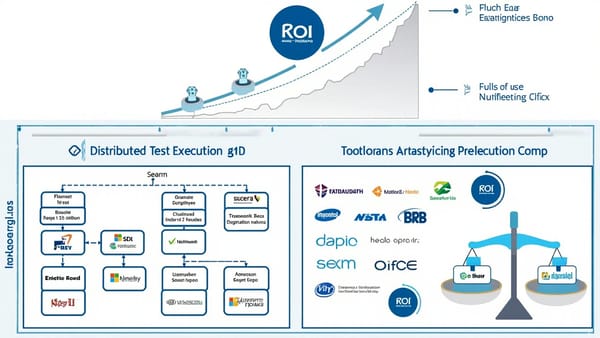
Scaling test automation beyond 50 engineers requires more than adding tools — it demands deliberate decisions about ROI measurement, toolchain architecture, distributed execution, and ownership models. This guide walks senior QA leaders through the frameworks that separate high-performing automation programs from expensive, slow, maintenance-heavy ones. Key Takeaways ROI must

Test Automation
Unit tests run on your laptop in milliseconds. They catch logic bugs early and give you fast feedback.

Test Automation
Testing Chrome extensions requires a different approach than testing regular web pages.
Testing
"Should we test on real devices or emulators?" is a false choice. The right answer is both — but for different purposes and at different stages of your testing pipeline. Understanding what each approach catches and misses helps you build a mobile testing strategy that's thorough without

Test Automation
Integration tests that use mocked databases lie. They test your code's interaction with a mock, not with the actual database engine.

Test Automation
PIT (Pitest) is the standard mutation testing tool for Java. It integrates with Maven and Gradle, runs mutations on your bytecode (faster than source-level mutation), and generates HTML reports showing exactly which mutations survived and where. Maven Setup Add the PIT plugin to pom.xml: <build> <

Test Automation
.NET has a mature test automation ecosystem built around three layers: unit tests (xUnit/NUnit/MSTest + Moq), integration tests (WebApplicationFactory, Testcontainers), and end-to-end tests (Playwright, Selenium). This guide covers setting up all three layers, structuring a test project, running tests in CI, and measuring coverage. Key Takeaways Three-

Testing
Code coverage measures the percentage of your source code executed during tests. It's measured by tools like Istanbul/NYC (JavaScript), Coverage.py (Python), and JaCoCo (Java). Coverage is a useful signal for finding untested code, but it's frequently misused as a quality gate. 100% coverage doesn&
QA
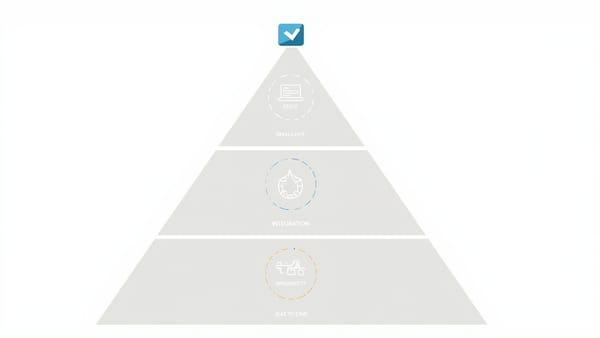
The testing pyramid is one of the most widely cited concepts in software engineering — and one of the most frequently misapplied.