
Smoke vs Regression vs Acceptance Testing: A Three-Way Comparison
Every mature test strategy uses multiple types of tests, each serving a different purpose.

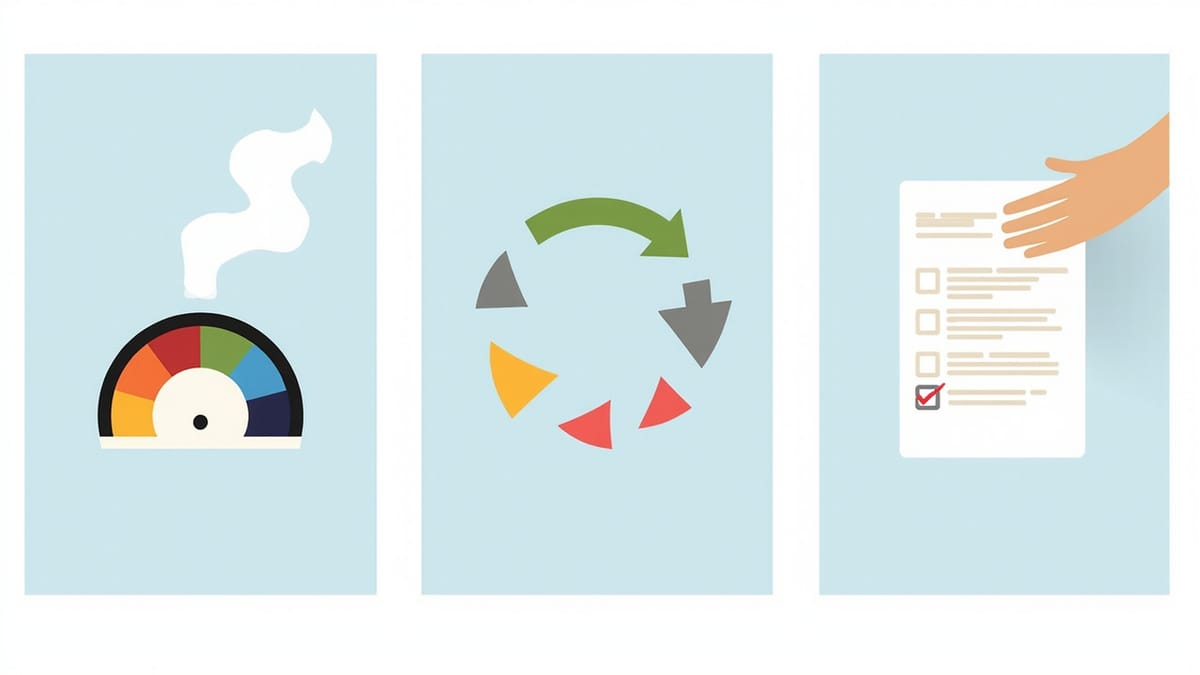
Every mature test strategy uses multiple types of tests, each serving a different purpose. Smoke, regression, and acceptance testing are three of the most commonly used — and most commonly confused.
They're not interchangeable. Running the wrong type of test at the wrong time wastes time at best and gives false confidence at worst. Understanding the purpose and scope of each lets you build a test strategy that actually catches problems where they live.
The Three Types at a Glance
| Smoke Testing | Regression Testing | Acceptance Testing | |
|---|---|---|---|
| Question answered | Is the build testable? | Did we break anything? | Does it meet requirements? |
| Scope | Broad, shallow | Broad, deep | Specific, detailed |
| When it runs | Every build | Before release | Before sign-off |
| Written by | QA / automation engineers | QA engineers | QA + product + stakeholders |
| Duration | 2–5 minutes | 30 minutes to hours | Minutes to days |
| Failures mean | Reject the build | Investigate and fix | Feature doesn't meet spec |
Smoke Testing
Smoke tests are a pre-qualification check. Before running any other tests, you run smoke tests to confirm the build is worth testing at all.
The defining characteristic of a smoke test is speed and breadth. It touches many parts of the application but doesn't verify any of them in depth. A passing smoke suite tells you: the application boots, the main sections are accessible, and nothing is catastrophically broken.
A smoke test for an issue tracking tool might check:
- The homepage loads without errors
- Login works with valid credentials
- The issue list page renders
- The create issue form is accessible
- The API health endpoint returns 200
If any of these fail, the entire build is rejected before deeper testing begins. This is the point — if login is broken, there's no value in running 400 regression tests. Smoke tests prevent wasted time.
Smoke tests are not designed to find bugs. They're designed to catch obvious failures early. A smoke test suite that's trying to be comprehensive has become something else — probably a regression suite with poor organization.
When to run: automatically, on every build, as the first stage of the CI pipeline.
Regression Testing
Regression tests verify that existing functionality still works after a change. Every time you ship new code, you risk breaking something that was working before. Regression tests catch those regressions before they reach users.
Regression testing is broad and deep. It covers all the features of the application — not just whether they're accessible, but whether they work correctly across a range of inputs and scenarios.
A regression suite for the same issue tracking tool might include:
- Creating an issue with each priority level
- Assigning an issue to each team member role
- Filtering issues by status, assignee, label, date range
- Bulk operations on issues
- Issue linking and dependencies
- Comment threading and mentions
- Email notifications for issue updates
- Search across issues
- Export to CSV
- Webhook triggers on issue state changes
This is comprehensive. It takes time to run (often 30–90 minutes) and catches problems that smoke tests would miss entirely.
Regression tests get slower over time. Every new feature adds more regression tests. Managing this growth — through parallelization, test selection, and periodic pruning — is an ongoing effort.
When to run: before every release, and on a nightly schedule to catch slowdowns. Not on every commit (too slow), but before anything reaches users.
Acceptance Testing
Acceptance testing answers a different question: does this feature do what was specified? Where smoke and regression testing are about technical correctness, acceptance testing is about functional correctness against a specification.
Acceptance tests are written from the user's perspective, often using the exact language of requirements or user stories. They verify that the product meets what was agreed upon — which is why they're also called User Acceptance Testing (UAT) or specification tests.
For the issue tracking tool, acceptance testing for a new "SLA tracking" feature might verify:
- Issues marked as "critical" show SLA timers
- SLA timers count down in real time
- SLA breach triggers a notification to the assignee
- SLA breach changes the issue's visual state to indicate breach
- SLA configuration can be set per project
- SLA is paused when an issue is placed "on hold"
- Reports show SLA compliance percentage over a date range
These acceptance criteria were defined before development started. The acceptance test is a formal verification that all of them were met.
Acceptance testing often involves non-technical stakeholders. Product managers, business analysts, or clients may participate in or sign off on acceptance testing. The test format is usually written in a language that non-developers can understand.
When to run: at the end of a development cycle, before a feature is declared "done" and shipped to users.
How They Work Together
The three types of testing form layers, each with a different cadence and purpose:
Every commit:
└── Smoke tests (2–5 min)
    └── PASS → proceed to staging
    └── FAIL → reject build, notify team

Every release candidate:
└── Regression tests (30–90 min)
    └── PASS → proceed to acceptance
    └── FAIL → investigate and fix regressions

Every completed feature:
└── Acceptance tests (varies)
    └── PASS → feature is complete, ready to ship
└── FAIL → feature doesn't meet requirements, back to developmentIn practice, the layers overlap. A feature might have:
- 2 smoke test entries (can you access the feature area, does the page load)
- 15 regression test cases (does it work correctly in all scenarios)
- 8 acceptance criteria to verify (does it meet the spec)
The same automation can cover multiple purposes. A test that verifies the SLA breach notification is sent is both a regression test (it will run on every future release to catch regressions) and an acceptance test (it was part of the original acceptance criteria).
Common Mistakes
Mistake 1: Using smoke tests as a substitute for regression tests. A smoke test tells you the feature is accessible. A regression test tells you it works correctly. Both are needed. A team that runs only smoke tests will ship bugs in functionality that's never deeply tested.
Mistake 2: Making regression tests too slow to run. A regression suite that takes 4 hours is run less often, which means regressions go undetected longer. Invest in parallelization. Cut tests that don't provide unique coverage. Target under 60 minutes for the full suite.
Mistake 3: Writing acceptance tests in technical language. Acceptance tests should be readable by the people who defined the requirements. If your acceptance tests are full of CSS selectors and HTTP status codes, they're regression tests with a different name.
Mistake 4: Skipping acceptance tests because "we have regression tests." Regression tests catch regressions — things that used to work and stopped working. Acceptance tests catch wrong implementations — things that work technically but don't meet the spec. You need both.
Mistake 5: Running acceptance tests continuously. Acceptance tests are for verifying a feature is done. They're not meant to run on every commit. Running them constantly creates noise and slows the pipeline for no benefit.
Automating Each Type
All three types benefit from automation, but the automation looks different:
Smoke tests: Full automation. No manual step. Run in CI, block deployment on failure. Written in code, maintained by engineers.
Regression tests: Primarily automated. The 80% that's automatable should be automated. Some edge cases involving visual judgment or complex business logic may remain manual. Run in CI on a nightly or pre-release schedule.
Acceptance tests: Mixed. The "happy path" acceptance criteria are often automated. Complex or subjective criteria (does this UX feel right, does this report make business sense) remain manual. The manual portion involves product and business stakeholders.
Building Your Testing Strategy
If you're starting from scratch, build in this order:
- Start with smoke tests. Five to ten tests, automated in CI, run on every build. This protects against catastrophic failures immediately.
- Add regression tests incrementally. As you fix bugs, add regression tests for those bugs. As you ship features, add regression tests for those features. The suite grows naturally.
- Define acceptance criteria before development. For new features, write acceptance criteria before writing code. These become your acceptance tests when development is complete.
- Measure and maintain. Track how often each test catches a real issue. Tests that have never caught anything are candidates for pruning. Tests that catch issues frequently are worth expanding.
The goal isn't to maximize test count. It's to maximize confidence that the application works correctly, with the minimum test suite that achieves that confidence. Smoke tests, regression tests, and acceptance tests each contribute to that goal in a different way — and none of them does the job alone.