Rainforest QA vs HelpMeTest: No-Code Testing Showdown
Rainforest QA and HelpMeTest both promise testing without writing code, but they solve the problem in completely different ways.

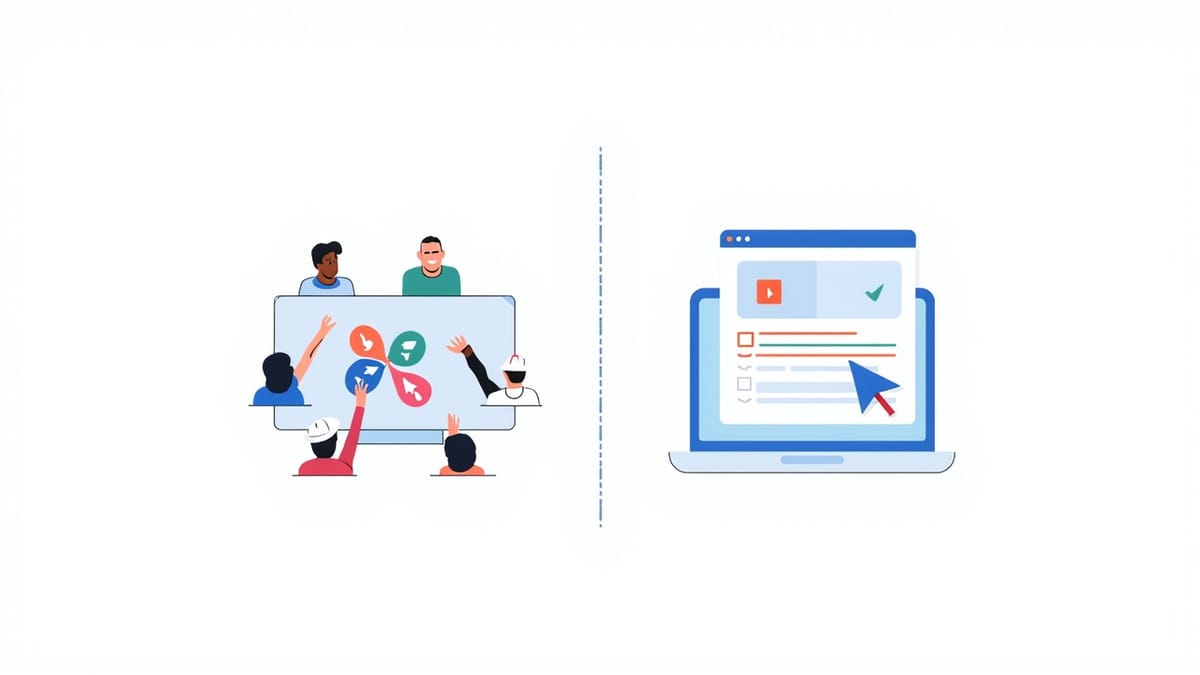
Rainforest QA and HelpMeTest both promise testing without writing code, but they solve the problem in completely different ways. Rainforest routes your tests through human testers; HelpMeTest runs them with AI and browsers. That fundamental difference shapes everything — speed, cost, consistency, and what you can actually verify.
Quick Comparison
| Rainforest QA | HelpMeTest | |
|---|---|---|
| Execution model | Human crowd testers | AI + Playwright automation |
| Code required | No | No |
| Test speed | Minutes to hours (human execution) | Seconds to minutes |
| Consistency | Variable (human judgment) | Deterministic (same test, same steps) |
| 24/7 monitoring | No (on-demand runs) | Yes (5-minute intervals) |
| Pricing | Per-run, custom tiers | Usage-based ($0.003/run, no base fee) |
| Visual testing | Human eyes | AI visual flaw detection |
| Best for | Exploratory / UX validation | Regression, monitoring, CI gating |
How Each Tool Works
Rainforest QA sends your test cases to a crowd of human testers who execute them manually. You write test steps in plain English; Rainforest routes them to available testers, collects results, and flags failures. This is genuinely powerful for validating UX — humans catch things automation misses, like confusing flows or copy that doesn't make sense. The tradeoff is latency: tests take minutes to hours, not seconds.
HelpMeTest generates fully automated tests from plain English descriptions. You describe what should happen; the AI produces a Robot Framework + Playwright test that runs in a real browser with no human in the loop. Tests run in seconds, can run in parallel, and run on a schedule 24/7 without consuming your testing budget per run.
The Consistency Question
Human testing has an inherent variance problem. Two testers executing the same steps may have different interpretations of "verify the checkout flow works." One tester might notice that the coupon field is partially obscured on mobile; another might not. That variance is sometimes valuable (catching edge cases) but makes Rainforest poor for regression testing where you need consistent, repeatable results.
Automated tests in HelpMeTest run identically every time. The same test against the same commit will produce the same result, making it reliable for CI/CD gates and production monitoring.
Speed and Monitoring
Rainforest is not usable for 24/7 monitoring — you can't have humans checking your app every 5 minutes around the clock. You run Rainforest tests on-demand or after significant releases.
HelpMeTest runs health checks every 5 minutes by default and every 10 seconds on Enterprise. It monitors your production environment continuously and alerts via Slack or email when anything breaks — regardless of whether a deploy just happened.
Pricing Model
Rainforest charges per test run, with costs that compound quickly as your suite grows and run frequency increases. High-frequency testing gets expensive fast.
HelpMeTest uses usage-based pricing — $0.003 per test run, billed at $3 per 1,000 runs — with no base fee, no minimums, unlimited tests, and unlimited parallel execution.
Visual Testing
Both tools handle visual validation differently. Rainforest testers look at your UI with human eyes and flag anything that looks wrong — this is qualitative and catches genuine UX issues.
HelpMeTest's Check For Visual Flaws keyword uses AI to detect anomalies against a baseline: layout shifts, missing elements, rendering artifacts. It's quantitative and consistent — the same visual check runs on every test run across mobile, tablet, and desktop viewports.
Where Rainforest Still Wins
Rainforest excels at things that automation genuinely can't do well:
- First-impression UX validation ("does this flow feel intuitive?")
- Accessibility review beyond what automated tools check
- Copy and messaging review
- Complex multi-step workflows with branching decisions that are expensive to automate
If you're about to ship a redesigned onboarding flow and want actual humans to evaluate it before launch, Rainforest is the right tool for that job.
When to Choose HelpMeTest
- You need regression coverage that runs every commit, not just before major releases
- You need production monitoring, not just pre-release testing
- Rainforest's per-run human testing doesn't fit your budget as your test suite scales
- You want tests that run in seconds, not minutes or hours
- You need both functional and visual regression testing in one tool
Using Both Together
The strongest setup is often both: use HelpMeTest for automated regression, CI gating, and 24/7 production monitoring, and bring in Rainforest for targeted UX validation on major new features. Automation handles the high-frequency, deterministic work; humans handle the qualitative judgment calls.
Bottom Line
Rainforest QA and HelpMeTest aren't direct competitors — they're different tools for different jobs. If your biggest testing gap is "we need to check this release feels right before shipping," Rainforest fills it. If your biggest gap is "our production app breaks and we don't know for hours" or "we skip regression testing because writing tests takes too long," HelpMeTest is the answer. Most teams with mature testing pipelines end up using automation for the 90% and humans for the 10% that automation can't reliably judge.