How to Do QA Without a Dedicated QA Team
Most early-stage startups don't have a QA team. They also can't afford to let bugs reach production constantly.

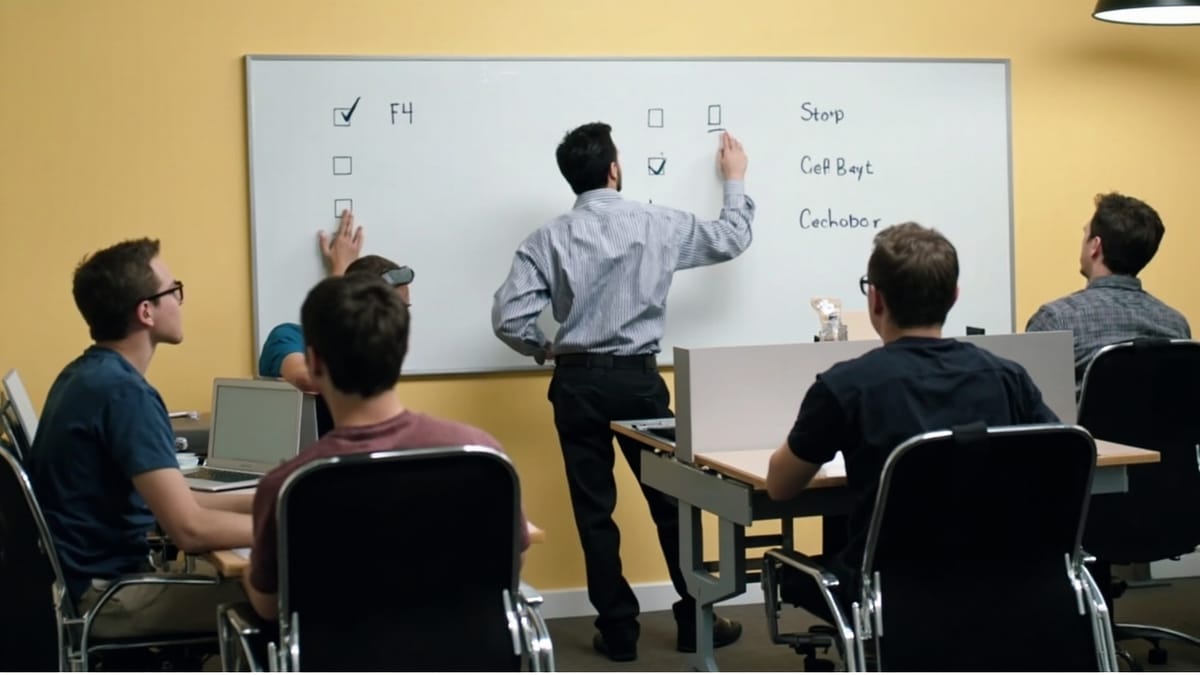
Most early-stage startups don't have a QA team. They also can't afford to let bugs reach production constantly. The solution isn't to skip quality — it's to build a QA process that works without dedicated headcount.
This is not about "everyone is responsible for quality" as a vague cultural statement. That phrase usually means nobody is responsible for quality. This is about specific practices, tools, and ownership rules that make dev-led QA actually work.
Why Most "Dev-Led QA" Fails
The classic failure mode: engineers are told they own quality. Nothing is defined. There's no process, no tooling, no clear ownership. Everyone tests their own code in a dev environment right before merging. Bugs still reach production constantly.
This fails for predictable reasons:
Engineers are blind to their own assumptions. The person who wrote the feature knows exactly what it's supposed to do, so they test exactly that. Edge cases and integration failures are invisible to them.
"Test before you merge" doesn't scale. As the team grows and deploys accelerate, manual verification before every merge becomes the bottleneck. It gets skipped.
No one owns the cross-cutting concerns. Individual engineers test their own features. Nobody tests how features interact, what happens after a week of usage, or whether a change in one area broke something in another.
The fix is structure, not culture.
The Three-Layer QA Model for Small Teams
Effective dev-led QA works in three layers:
Layer 1: Automated Tests in CI (The Floor)
Every PR merges with tests. Not test coverage metrics — actual tests that verify behavior. The rule is simple: if you changed a user-facing behavior, there must be a test that would fail if that behavior broke.
For API endpoints: an integration test that hits the endpoint and checks the response. For frontend flows: an end-to-end test that clicks through the interaction. For background jobs: a test that exercises the job logic end-to-end.
This layer doesn't require a QA engineer. It requires an engineering norm. Someone on the team — usually a senior engineer or tech lead — sets the standard and reviews for it on every PR.
Layer 2: Automated Smoke Tests on Every Deploy
After your code ships to staging (and optionally production), automated smoke tests verify the critical paths still work. These run unattended and alert on failure.
The smoke suite should cover:
- Sign up and login
- The core feature (whatever your product primarily does)
- Payment or billing flow if you have one
- Any integration with a third-party service users depend on
This suite should take under 5 minutes to run. If it takes longer, you'll be tempted to skip it.
Tools like HelpMeTest are built for exactly this: you describe what a user should be able to do ("sign up with a new account, complete the onboarding checklist, create a project"), and the platform generates and runs the tests against your live environment on a schedule. No QA engineer required to maintain them — the self-healing test system adapts when minor UI changes happen.
Layer 3: Ownership Assignment
This is the most underrated piece. For every major area of your product, one engineer owns quality for that area. Not "is responsible for writing all the tests" — owns the answer to "is this area working right now?"
Ownership means:
- You're paged if a test in your area fails
- You review new tests in your area for completeness
- You run a smoke check before major changes deploy to your area
On a 4-person team, each person might own 1-2 areas. That's fine. The point is that someone can be asked "is checkout working?" and have a real answer.
Practices That Make This Work in Practice
Pre-Merge Checklists for High-Risk Changes
For changes to payment flows, authentication, data migrations, or core features, require a short pre-merge checklist:
[ ] Tested happy path locally
[ ] Tested error case (invalid input, service down, etc.)
[ ] Checked that existing tests still pass
[ ] Verified in staging environment
[ ] Informed team if this changes shared behaviorThis isn't bureaucracy — it's 3 minutes that catches 80% of the bad merges.
Cross-Testing Between Engineers
The engineer who wrote the feature tests their own code. A different engineer does a 10-minute exploratory check of the same feature before it ships to production. Two people, different assumptions.
This doesn't have to be formal. "Hey, can you spend 10 minutes trying to break the new import flow before I ship?" is enough. The second pair of eyes catches things the first pair can't see.
Staged Rollouts
Don't ship to 100% of users at once. Use feature flags or percentage rollouts to expose new features to 10% of users first. Monitor error rates. If things look clean after an hour, roll out to everyone.
This isn't a testing practice per se, but it limits the blast radius of bugs that get through your testing layers. A bug that affects 10% of users for 1 hour is recoverable. A bug that affects all users for 3 days before you notice is not.
Incident Retrospectives That Actually Improve Process
When a bug reaches production and causes damage, do a 30-minute retrospective. Not to assign blame — to answer: what testing layer should have caught this, and why didn't it?
If the answer is "we had no test for this flow," add the test. If the answer is "we had a test but it was wrong," fix the test. If the answer is "we had a test that passed but the behavior is still wrong," you've found a deeper problem in your test design.
Without retrospectives, you fix the symptom (the bug) but not the system (the gap in coverage). The same type of bug comes back in 6 weeks.
Tooling That Fills the QA Gap
The right tools reduce the human effort required to maintain quality:
End-to-end test automation: Robot Framework, Playwright, Cypress. Or a higher-level tool like HelpMeTest that manages the infrastructure and test generation so your engineers don't have to.
Error monitoring: Sentry (or equivalent). Every unhandled exception in production gets logged and alerted. This catches bugs you didn't test for.
Uptime monitoring: Health check pings every minute. Alert when the app is unreachable. HelpMeTest includes this as part of its usage-based pricing.
Log aggregation: Being able to query production logs when something goes wrong is underrated. Datadog, Papertrail, or even CloudWatch. You can't debug what you can't see.
Feature flags: LaunchDarkly, Unleash, or a simple homegrown system. Enables staged rollouts and instant kill switches.
You don't need all of these immediately. The minimum effective stack is: error monitoring + uptime monitoring + automated smoke tests. That combination catches most production failures before users report them.
What You're Actually Trying to Prevent
Good dev-led QA isn't about achieving 100% test coverage. It's about preventing three specific failure modes:
- Silent failures: The app is broken and nobody knows. Prevented by monitoring.
- Regression failures: A previous working feature stops working. Prevented by automated smoke tests.
- "Worked on my machine" failures: Code that worked in development fails in production. Prevented by testing against staging environments.
If your process reliably catches these three, you're doing better than most teams with dedicated QA.
Scaling This Approach
Dev-led QA with this structure works until roughly 8-10 engineers and 2-3 concurrent products. Past that, the coordination overhead of distributed ownership gets heavy, and the business case for a dedicated QA engineer or QA lead becomes clear.
The transition point is usually when:
- One engineer starts spending more than 50% of their time on quality infrastructure
- You have more than 2-3 releases per day across different teams
- A regression has caused a significant incident and the retrospective reveals structural gaps
At that point, you've outgrown shared ownership and need someone whose full job is quality. But you'll be in a much better position having built the foundation — the tooling, the practices, the culture — before that hire arrives.