QA ROI Calculation for Executives: Making the Business Case for Quality


QA investment pays back 4–15× depending on when bugs are caught. Bugs found in production cost 30× more to fix than bugs found in requirements. This post gives you the formulas to calculate your actual ROI and the narrative to present it upward.
Key Takeaways
- The IBM Systems Sciences Institute found that bugs fixed in production cost up to 100× more than bugs fixed in design
- A practical QA ROI formula: (Cost of Bugs Prevented – Cost of QA) / Cost of QA × 100
- Three metrics executives actually care about: revenue protected, MTTR reduction, and release velocity
- Defect amplification: each phase a bug travels through multiplies the fix cost by roughly 5–10×
- You need baseline data (current bug rates, fix costs, incident costs) before you can calculate ROI
Why QA ROI Is Hard to Sell
Quality Assurance has a perception problem. To a CFO staring at a budget, QA looks like pure cost — engineers writing tests instead of features, infrastructure running test suites, time spent in bug triage. The value is invisible because it's the absence of something: production incidents that didn't happen, customer data that wasn't corrupted, SLA penalties that were never triggered.
To make the business case for QA investment, you need to do two things: quantify the cost of not having adequate QA, and translate that into terms leadership uses — revenue risk, engineering efficiency, and competitive velocity.
This post gives you the frameworks to do both.
The Foundational Concept: Cost of Quality
The Cost of Quality (CoQ) framework, developed by Philip Crosby and Joseph Juran, divides quality-related spending into four buckets:
Prevention costs — activities that keep defects from occurring in the first place: test planning, writing automated tests, code reviews, CI/CD pipeline investment.
Appraisal costs — activities that detect defects before they reach users: test execution, QA review cycles, security scanning.
Internal failure costs — defects caught before production: rework, regression debugging, sprint spillover.
External failure costs — defects that reach users: incident response, customer refunds, churn, reputational damage, regulatory fines.
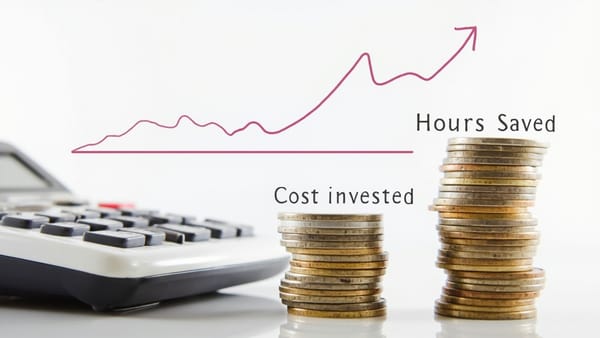
The insight is that prevention and appraisal costs are small relative to failure costs — especially external failure costs. Investing $1 in prevention typically eliminates $4–$15 in failure costs. That ratio is your starting ROI argument.
The Bug Cost Multiplier
The most cited statistic in QA economics comes from a 1980s IBM study, replicated repeatedly since: the cost to fix a bug multiplies by roughly 5–10× for each phase it passes through undetected.
| Phase Bug Is Found | Relative Fix Cost |
|---|---|
| Requirements / Design | 1× |
| Development | 5× |
| QA / Testing | 10× |
| Staging / UAT | 20× |
| Production | 50–100× |
The exact multipliers vary by system complexity, but the directionality is consistent. A bug that takes 30 minutes to fix in design takes 25+ hours to fix in production once you account for incident response, hotfix deployment, customer communication, and post-mortem.
Calculating Your Organization's Multiplier
Pull 6 months of bug data and categorize each by:
- Where it was introduced (code change, requirements gap, integration)
- Where it was detected (unit test, integration test, QA, staging, production)
- Total hours spent fixing it (dev time + QA re-test + deployment + customer support)
Average the fix cost by detection phase. This gives you your actual multiplier — which you'll use in the ROI formula.
The QA ROI Formula
The core formula is simple:
QA ROI (%) = [(Cost of Bugs Prevented – Cost of QA) / Cost of QA] × 100Breaking it down:
Cost of Bugs Prevented = (Number of bugs caught by QA × Average production fix cost) – (Number of bugs caught by QA × Average QA fix cost)
Cost of QA = QA engineer salaries + tooling + infrastructure + time spent in test cycles
Worked Example
Assume a 20-person engineering team with the following data:
- 40 bugs caught by QA per quarter, average fix cost at QA stage: 4 hours × $75/hr = $300
- Without QA, those same bugs reach production, average fix cost: 40 hours × $75/hr = $3,000
- Savings per bug caught: $3,000 – $300 = $2,700
- Total savings: 40 bugs × $2,700 = $108,000/quarter
- QA investment (1 QA engineer + tools): $30,000/quarter
ROI = ($108,000 – $30,000) / $30,000 × 100 = 260%
That's a conservative calculation that excludes incident costs, customer churn, and SLA penalties. Including those typically doubles the ROI figure.
What Executives Actually Care About
A 260% ROI number is compelling, but executives at different levels ask different questions. Translate your QA value into their native language.
For the CFO: Revenue Protection
Calculate the revenue at risk from production incidents:
Revenue at Risk = Monthly Revenue × (Average Incident Duration / Hours in Month) × Incident FrequencyIf your app generates $500K/month and you have 2 incidents/month averaging 3 hours each:
- Revenue at risk = $500,000 × (6/730) = $4,110/month
If better QA reduces incidents from 2/month to 0.5/month, you're protecting ~$3,000/month in revenue — $36,000/year. Present that against QA tooling costs.
For the CTO: Engineering Efficiency
Developer time spent on production bugs is time not spent on features. Track:
- Bug triage time per engineer per sprint
- Context-switch cost — debugging production requires abandoning current work, typically 45+ minutes to re-enter flow state per interruption
- On-call burden — engineers on PagerDuty rotation have reduced daytime productivity
One production incident that takes 2 engineers 4 hours to resolve costs $600 in labor — plus productivity loss for the rest of the day. QA that prevents that incident pays for itself immediately.
For the CEO/Board: Competitive Velocity
Companies with mature QA ship faster. This is counterintuitive but well-documented in the DORA State of DevOps reports. High-performing teams deploy more frequently and have lower change failure rates — because they invest in automated testing infrastructure that makes deployments predictable.
Frame QA investment as: "This is how we go faster without breaking things."
Building Your ROI Baseline
Before you can calculate ROI, you need data. Spend 2–4 weeks collecting:
Bug inventory
- Total bugs reported (by source: automated tests, manual QA, production incidents, customer reports)
- Time to fix by bug source
- Severity distribution
Incident data
- Production incidents per month
- Mean time to detect (MTTD) and mean time to resolve (MTTR)
- Revenue/SLA impact per incident
Engineering time allocation
- Hours per sprint spent on bug fixes vs. new features
- On-call hours and after-hours incidents
Current QA investment
- QA engineer costs (salaries, benefits, contractor fees)
- Testing tooling (licenses, infrastructure)
- Time developers spend writing/maintaining tests
With this baseline, you can calculate the before state. After investing in QA improvements, re-measure after 2 quarters to show the delta.
Common Pitfalls When Presenting QA ROI
Pitfall 1: Using only direct fix costs. The biggest costs from production bugs are indirect — customer churn, support tickets, reputation damage, delayed roadmap items. Always include a conservative estimate of these.
Pitfall 2: Claiming credit for everything. If production incidents drop after a QA investment, some of that reduction may come from infrastructure improvements or reduced deployment frequency. Be honest about attribution.
Pitfall 3: Measuring only what's easy. Bug count is an easy metric but a misleading one. A team that fixes 100 low-severity bugs is not more valuable than a team that prevented 5 P0 incidents. Weight by severity.
Pitfall 4: Ignoring test maintenance costs. Automated tests require maintenance. A test suite that nobody maintains becomes a drag — flaky tests, false positives, slow pipelines. Always include ongoing maintenance in your cost model.
Presenting to Leadership: The One-Page Summary
When you bring this to an executive meeting, lead with business outcomes, not technical metrics.
Wrong opening: "We have 78% code coverage and our flaky test rate is under 3%."
Right opening: "Our QA investment protected $420,000 in revenue last quarter by catching 47 production-bound bugs before they reached customers. Our ROI on QA spend was 280%."
Structure your one-pager:
- Current state — incidents, MTTR, engineering time on bugs (2–3 sentences)
- What QA investment achieved — bugs caught, incidents prevented, time saved (specific numbers)
- ROI calculation — one clear number with the formula shown
- Next investment ask — what additional investment would buy (e.g., "Adding automated regression testing reduces our deployment risk by an estimated X%")
Continuous ROI Measurement
ROI isn't a one-time calculation. Build a simple QA scorecard that updates monthly:
| Metric | Baseline | Current | Trend |
|---|---|---|---|
| Bugs in production | 12/month | 4/month | ↓ |
| Avg incident cost | $2,400 | $1,800 | ↓ |
| QA investment | $25K/month | $28K/month | ↑ |
| Calculated ROI | — | 340% | — |
Share this at quarterly business reviews. Over time, the trend line is more convincing than any single data point.
How HelpMeTest Fits the ROI Equation
The ROI model above assumes you have QA coverage. Many teams don't — not because they don't want it, but because setting up and maintaining automated test infrastructure is expensive and slow.
HelpMeTest lets teams create automated tests in plain English without code, and run them continuously on a schedule. This shifts the cost structure: instead of QA engineers spending 60% of their time writing and maintaining test scripts, they spend that time on exploratory testing and test strategy — higher-value work.
If you're building the ROI case for QA investment, the marginal cost of adding automated monitoring via HelpMeTest is low relative to the protection it provides. For a SaaS product with $50K+ MRR, catching even one production regression per month pays for years of tooling.
Summary
The business case for QA investment is strong — but it requires data. Start by collecting your bug baseline, calculate your actual cost multiplier, and translate prevention savings into revenue terms. The formula is simple; the discipline is in the data collection.
The executives who resist QA investment typically haven't seen the numbers. Show them the numbers.