HTTP Mocking in Elixir with Bypass
When Elixir applications call external HTTP services — payment processors, webhooks, third-party APIs — tests need to control those HTTP interactions.

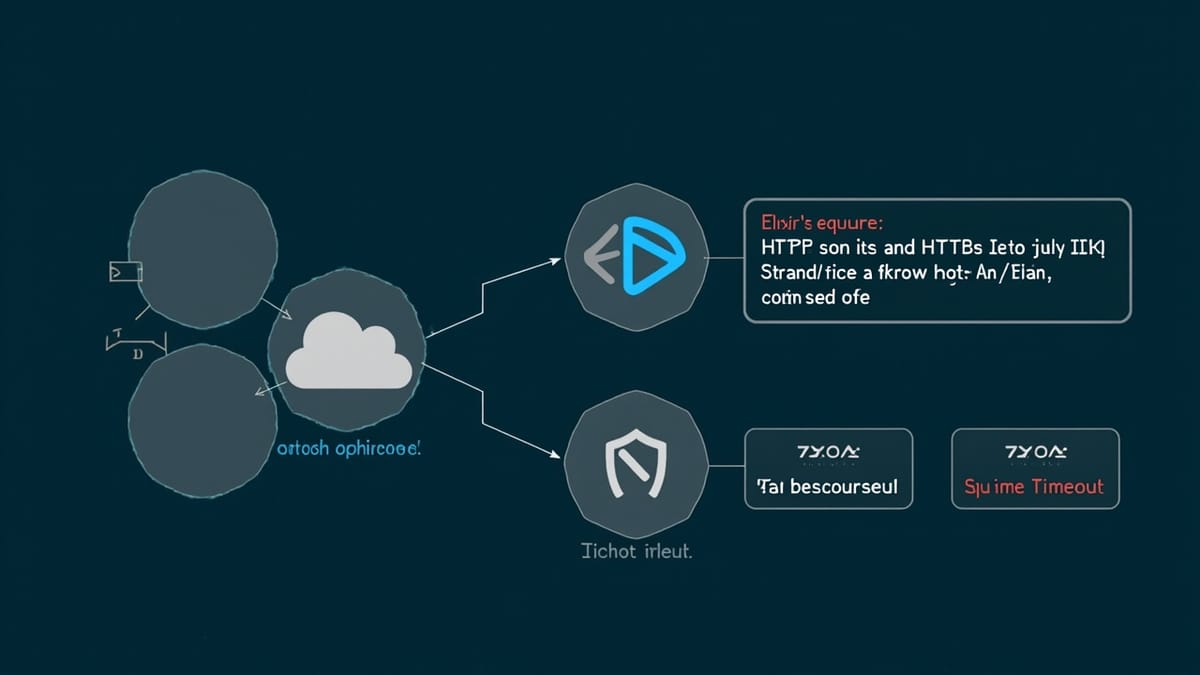
When Elixir applications call external HTTP services — payment processors, webhooks, third-party APIs — tests need to control those HTTP interactions. Bypass spins up a real HTTP server locally, intercepts requests your application makes, and lets you define exactly what responses to return. Unlike request-level stubs, Bypass tests your HTTP client configuration, URL construction, and error handling at the real TCP level.
How Bypass Works
Bypass starts a real HTTP server on a random port before each test. You configure how it responds to requests. Your application's HTTP client makes real TCP connections to this server. After the test, Bypass shuts down automatically.
This approach catches issues that stub-based mocking misses:
- Wrong base URL configuration
- Missing or incorrect headers
- HTTP client timeout configuration
- Connection pooling behavior
- SSL/TLS configuration errors
Installation
# mix.exs
defp deps do
  [
    {:bypass, "~> 2.1", only: :test},
    {:httpoison, "~> 2.0"},  # or req, finch, tesla
  ]
endBasic Setup
defmodule MyApp.WeatherApiTest do
  use ExUnit.Case, async: true

  setup do
    bypass = Bypass.open()
    {:ok, bypass: bypass}
  end

  test "fetches current weather", %{bypass: bypass} do
    Bypass.expect_once(bypass, "GET", "/weather/current", fn conn ->
      Plug.Conn.resp(conn, 200, Jason.encode!(%{
        temperature: 72,
        condition: "sunny",
        city: "NYC"
      }))
    end)

    result = MyApp.WeatherApi.current("NYC", base_url: "http://localhost:#{bypass.port}")

    assert {:ok, %{temperature: 72, condition: "sunny"}} = result
  end
endBypass.open() starts the server. Bypass.expect_once/4 defines a handler that matches one request. After the test completes, Bypass verifies the expected request was actually made — if your code never called the API, the test fails.
Configuring Your Application URL
The key to Bypass integration is making the base URL configurable. Never hardcode API URLs:
# lib/my_app/weather_api.ex
defmodule MyApp.WeatherApi do
  @base_url Application.compile_env(:my_app, :weather_api_url, "https://api.weather.com")

  def current(city, opts \\ []) do
    base_url = Keyword.get(opts, :base_url, @base_url)
    url = "#{base_url}/weather/current?city=#{city}"
    # ...
  end
endOr use application config:
# config/test.exs
config :my_app, :weather_api_url, "http://localhost"# In tests, override port
setup do
bypass = Bypass.open()
Application.put_env(:my_app, :weather_api_url, "http://localhost:#{bypass.port}")
on_exit(fn -> Application.delete_env(:my_app, :weather_api_url) end)
{:ok, bypass: bypass}
endRequest Verification Patterns
Verify Request Path and Method
test "calls correct endpoint", %{bypass: bypass} do
  Bypass.expect_once(bypass, "POST", "/v1/charges", fn conn ->
    {:ok, body, conn} = Plug.Conn.read_body(conn)
    payload = Jason.decode!(body)

    assert payload["amount"] == 1000
    assert payload["currency"] == "usd"

    conn
    |> Plug.Conn.put_resp_content_type("application/json")
    |> Plug.Conn.resp(200, Jason.encode!(%{id: "ch_123", paid: true}))
  end)

  {:ok, charge} = MyApp.Stripe.charge(amount: 1000, currency: "usd")
  assert charge.id == "ch_123"
endVerify Headers
test "sends Authorization header", %{bypass: bypass} do
  Bypass.expect_once(bypass, "GET", "/api/data", fn conn ->
    auth = Plug.Conn.get_req_header(conn, "authorization")
    assert auth == ["Bearer test-api-key"]

    Plug.Conn.resp(conn, 200, Jason.encode!(%{data: []}))
  end)

  MyApp.Client.fetch_data(api_key: "test-api-key", base_url: bypass_url(bypass))
endVerify Query Parameters
test "passes search parameters in query string", %{bypass: bypass} do
  Bypass.expect_once(bypass, "GET", "/search", fn conn ->
    params = conn.query_params

    assert params["q"] == "elixir testing"
    assert params["page"] == "2"
    assert params["per_page"] == "20"

    Plug.Conn.resp(conn, 200, Jason.encode!(%{results: [], total: 0}))
  end)

  MyApp.Search.query("elixir testing", page: 2, per_page: 20)
endError Scenario Testing
Bypass makes it easy to test how your application handles API failures:
HTTP Error Responses
test "returns error tuple on 401", %{bypass: bypass} do
  Bypass.expect_once(bypass, "GET", "/protected", fn conn ->
    conn
    |> Plug.Conn.put_resp_content_type("application/json")
    |> Plug.Conn.resp(401, Jason.encode!(%{error: "Unauthorized"}))
  end)

  assert {:error, :unauthorized} = MyApp.Client.get_protected()
end

test "returns error tuple on 429 rate limit", %{bypass: bypass} do
  Bypass.expect_once(bypass, "GET", "/api/data", fn conn ->
    conn
    |> Plug.Conn.put_resp_header("retry-after", "60")
    |> Plug.Conn.resp(429, Jason.encode!(%{error: "Rate limit exceeded"}))
  end)

  assert {:error, {:rate_limited, retry_after: 60}} = MyApp.Client.fetch()
end

test "handles 503 with retry", %{bypass: bypass} do
  # First call fails
  Bypass.expect_once(bypass, "GET", "/api/data", fn conn ->
    Plug.Conn.resp(conn, 503, "Service Unavailable")
  end)

  # Retry succeeds
  Bypass.expect_once(bypass, "GET", "/api/data", fn conn ->
    Plug.Conn.resp(conn, 200, Jason.encode!(%{result: "ok"}))
  end)

  assert {:ok, %{result: "ok"}} = MyApp.Client.fetch_with_retry()
endNetwork Failures
test "handles connection refused", %{bypass: bypass} do
  Bypass.down(bypass)  # shut down the server

  assert {:error, :connection_refused} = MyApp.Client.fetch()
end

test "handles timeout", %{bypass: bypass} do
  Bypass.expect_once(bypass, "GET", "/slow", fn conn ->
    Process.sleep(5_000)  # exceed client timeout
    Plug.Conn.resp(conn, 200, "ok")
  end)

  assert {:error, :timeout} = MyApp.Client.fetch_slow(timeout: 100)
endServer Errors
test "handles malformed JSON response", %{bypass: bypass} do
  Bypass.expect_once(bypass, "GET", "/api/data", fn conn ->
    Plug.Conn.resp(conn, 200, "not valid json{{{{")
  end)

  assert {:error, :invalid_response} = MyApp.Client.fetch()
endMultiple Requests
Use Bypass.expect/3 (without _once) for endpoints called multiple times:
test "paginates through all results", %{bypass: bypass} do
  page_responses = [
    %{items: [1, 2, 3], next_page: 2},
    %{items: [4, 5, 6], next_page: 3},
    %{items: [7, 8], next_page: nil}
  ]

  call_count = :counters.new(1, [])

  Bypass.expect(bypass, "GET", "/items", fn conn ->
    idx = :counters.get(call_count, 1)
    :counters.add(call_count, 1, 1)
    response = Enum.at(page_responses, idx)
    Plug.Conn.resp(conn, 200, Jason.encode!(response))
  end)

  all_items = MyApp.Client.fetch_all()
  assert all_items == [1, 2, 3, 4, 5, 6, 7, 8]
endWebhook Testing
Bypass is ideal for testing webhook receipt — your app receives a webhook from an external service:
test "processes Stripe webhook", %{conn: conn} do
  payload = %{
    "type" => "payment_intent.succeeded",
    "data" => %{
      "object" => %{
        "id" => "pi_123",
        "amount" => 5000,
        "currency" => "usd",
        "metadata" => %{"order_id" => "ord-456"}
      }
    }
  }

  signature = StripeSignature.compute(payload, webhook_secret: "whsec_test")

  conn
  |> put_req_header("stripe-signature", signature)
  |> post("/webhooks/stripe", Jason.encode!(payload))
  |> json_response(200)

  assert MyApp.Orders.get("ord-456").status == :paid
endAsync Tests with Bypass
Bypass works with async: true because each test gets its own server instance on a unique port:
defmodule MyApp.ClientTest do
  use ExUnit.Case, async: true

  setup do
    bypass = Bypass.open()
    {:ok, bypass: bypass}
  end

  test "test A", %{bypass: bypass} do
    # port 12345 (example)
    Bypass.expect_once(bypass, "GET", "/a", fn conn ->
      Plug.Conn.resp(conn, 200, "ok")
    end)
    # ...
  end

  test "test B", %{bypass: bypass} do
    # port 12346 — completely separate server
    Bypass.expect_once(bypass, "GET", "/b", fn conn ->
      Plug.Conn.resp(conn, 200, "ok")
    end)
    # ...
  end
endHelper Module
Extract common patterns into a test support module:
defmodule MyApp.TestHelpers.BypassHelper do
  def bypass_url(bypass), do: "http://localhost:#{bypass.port}"

  def respond_with(bypass, method, path, status, body) do
    Bypass.expect_once(bypass, method, path, fn conn ->
      conn
      |> Plug.Conn.put_resp_content_type("application/json")
      |> Plug.Conn.resp(status, Jason.encode!(body))
    end)
  end

  def respond_with_timeout(bypass, method, path, delay_ms) do
    Bypass.expect_once(bypass, method, path, fn conn ->
      Process.sleep(delay_ms)
      Plug.Conn.resp(conn, 200, "ok")
    end)
  end
endBeyond Bypass: Continuous API Monitoring
Bypass ensures your application handles API interactions correctly pre-deploy. But external APIs change without notice — rate limits, response format changes, authentication expiry. HelpMeTest monitors your live application's API integrations continuously, alerting you when real external services start returning errors or timeouts.
Summary
Bypass gives Elixir tests a real HTTP server to test against — catching configuration and client errors that stub-based mocking misses. Use Bypass.expect_once/4 for single-request tests and verify request headers, query parameters, and body in the handler. Test error scenarios by returning non-200 status codes or calling Bypass.down/1 for connection failures. Enable async: true freely — each test gets its own server instance.
Configure your application clients to accept a configurable base URL, and you can point them at Bypass servers in tests without modifying production code.