
Test Automation
Chrome Extension Testing Guide: Jest, Puppeteer, and chrome-mock
Testing Chrome extensions requires a different approach than testing regular web pages.

In-depth tutorials and comparisons for testing tools and frameworks — Playwright, Cypress, Selenium, Robot Framework, and more.
Test Automation
Testing Chrome extensions requires a different approach than testing regular web pages.

Testing
Electron E2E testing with Playwright tests the full application, but unit tests with Jest run in milliseconds and catch business logic bugs during development. The challenge is that Electron's main process and renderer both have APIs that don't exist in Node.js or jsdom test environments.

Test Automation
Integration tests that use mocked databases lie. They test your code's interaction with a mock, not with the actual database engine.

Test Automation
PIT (Pitest) is the standard mutation testing tool for Java. It integrates with Maven and Gradle, runs mutations on your bytecode (faster than source-level mutation), and generates HTML reports showing exactly which mutations survived and where. Maven Setup Add the PIT plugin to pom.xml: <build> <
Tools & Frameworks
PHPUnit is the standard PHP testing framework. Pest is a modern alternative that wraps PHPUnit with a cleaner functional syntax. Both produce identical test results — the difference is entirely how you write tests. Pest is Laravel's default since v11. PHPUnit is the safe choice everywhere else. Key Takeaways

Integration Testing
Integration tests verify that PHP components work together: your service classes with a real database, your HTTP controllers with real routing, your external API clients against real or stubbed endpoints. This guide covers database integration testing with transactions, HTTP layer testing, testing with real queues and caches, and integrating with

Tools & Frameworks
Mockery is PHP's most powerful mocking library, popular in Laravel and Symfony ecosystems. It provides a fluent API for creating test doubles: mocks, stubs, spies, and partial mocks. This guide covers creating mocks, defining expectations with shouldReceive, argument matchers, mock verification, spies, and using Mockery with PHPUnit and
Tools & Frameworks
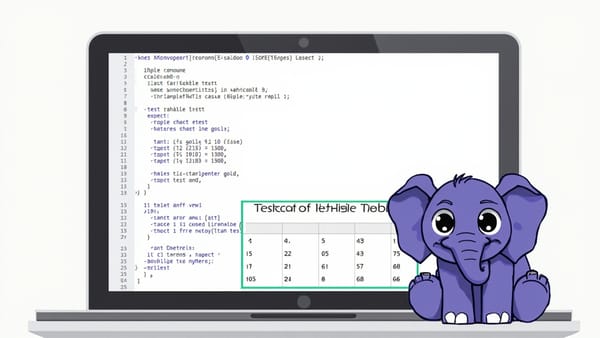
Pest is a modern PHP testing framework built on top of PHPUnit. It offers a simpler, more expressive syntax with test(), it(), and expect() — inspired by Jest and RSpec. Pest is Laravel's default testing framework since Laravel 11. This guide covers setup, writing tests, datasets, architecture testing, and
Tools & Frameworks
Laravel ships with a complete testing setup: PHPUnit configured, database factories, HTTP test helpers, and Artisan commands to generate tests. Feature tests let you make real HTTP requests to your application without a running server. This guide covers unit tests, feature tests, database testing, facade mocking, queue/event faking, and

Tools & Frameworks
PHPUnit is the standard testing framework for PHP. Every major PHP framework — Laravel, Symfony, WordPress — uses or supports PHPUnit. This guide covers installation, writing test classes, assertions, test doubles (mocks, stubs, spies), data providers, exception testing, code coverage, and CI integration. Key Takeaways PHPUnit test classes extend TestCase and methods
Integration Testing
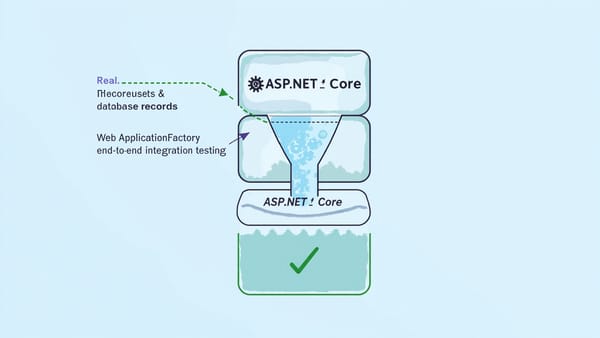
Integration testing in .NET means testing your application with real dependencies — real HTTP routing, real database queries, real middleware. WebApplicationFactory from Microsoft.AspNetCore.Mvc.Testing spins up your actual ASP.NET Core app in memory, letting you send real HTTP requests without a running server. This guide covers setup, database

Tools & Frameworks
Moq is the most popular mocking library for .NET. It lets you replace real dependencies (databases, email services, HTTP clients) with controlled fakes in unit tests. This guide covers Setup, Verify, argument matchers, callbacks, async mocks, and common patterns for writing isolated C# tests. Key Takeaways Mock<T>