
Database Testing
Testing DynamoDB Locally: DynamoDB Local, Localstack, and AWS SDK Mocking
DynamoDB is fast and serverless in production — but testing against live AWS DynamoDB is expensive, slow, and requires real AWS credentials.

Database Testing
DynamoDB is fast and serverless in production — but testing against live AWS DynamoDB is expensive, slow, and requires real AWS credentials.
Database Testing
Database migrations are the most dangerous deployments you'll make. A bad migration can corrupt data, lock tables, or bring down production — and rollbacks are often impossible once users interact with the new schema. This guide covers how to test migrations thoroughly across the four most popular migration tools.

Testing
MLflow provides the infrastructure for systematic ML model testing: experiment tracking for comparison, model validation for quality gates, and a model registry for staging promotion. This guide covers all three with practical test patterns for CI/ML pipelines. Why ML Models Need Tests Software tests assert that code does what

Testing
Google Test (gtest) is the de facto standard for C++ unit testing. It ships with a comprehensive assertion library, test fixtures, parameterized tests, and death tests. This tutorial gets you from zero to a working test suite integrated with CMake and CI in under an hour. Why Google Test C+
Testing
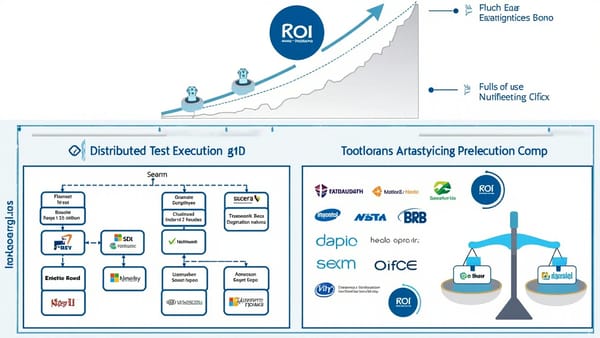
Scaling test automation beyond 50 engineers requires more than adding tools — it demands deliberate decisions about ROI measurement, toolchain architecture, distributed execution, and ownership models. This guide walks senior QA leaders through the frameworks that separate high-performing automation programs from expensive, slow, maintenance-heavy ones. Key Takeaways ROI must

Testing
For years, JavaScript was the only option for Solidity testing. Hardhat and Truffle gave you a familiar environment, but context-switching between Solidity contracts and JavaScript test files created friction. You had to constantly think about type conversions, BigNumber handling, and the impedance mismatch between the two languages. Foundry changes

Testing
Hardhat is the most widely used Ethereum development framework in the JavaScript ecosystem. Its TypeScript support, rich plugin library, and integration with ethers.js make it the default choice for teams building full-stack DApps. This tutorial covers everything from project setup to advanced patterns like mainnet forking and gas

Testing
Integration testing for Web3 applications verifies that your application code correctly interacts with smart contracts under realistic conditions. Using ethers.js with a local Hardhat node gives you fast, deterministic tests with full control over blockchain state. Mainnet forking adds real protocol state when you need to test against live

Testing
Smart contract bugs are permanent — once deployed, there is no hotfix. Rigorous testing with unit tests, integration tests, and fuzz testing is the only way to catch vulnerabilities before they cost real money. Hardhat and Foundry are the two dominant testing frameworks, each with distinct strengths. This guide covers both,

Testing
Security testing for smart contracts requires both automated tools and manual review. Slither performs fast static analysis and catches a wide range of common vulnerabilities. Mythril uses symbolic execution to find logical flaws that static analysis misses. Echidna performs property-based fuzzing to verify that invariants hold under adversarial conditions.

Testing
Real-Time Operating Systems introduce concurrency, scheduling, and timing constraints that make testing significantly harder than single-threaded firmware. This guide covers testing strategies for FreeRTOS, Zephyr, and VxWorks: verifying task timing and deadlines, detecting race conditions and priority inversion, testing memory management in constrained environments, using SystemView for execution

Testing
JTAG and GDB together give embedded engineers precise, non-invasive control over firmware execution on real hardware. This guide covers JTAG protocol fundamentals, connecting via OpenOCD, remote GDB debugging, breakpoints and watchpoints for test validation, inspecting memory and peripheral registers, and scripting GDB with Python to run automated test assertions