AI Testing
AI API Rate Limit Testing: Test Retry Logic and Exponential Backoff
Every production application that calls OpenAI, Anthropic, or Google Gemini will eventually hit a rate limit.

AI-powered testing guides — how to use AI to generate, run, and maintain automated tests faster.
AI Testing
Every production application that calls OpenAI, Anthropic, or Google Gemini will eventually hit a rate limit.

AI Testing
Calling the real OpenAI, Claude, or Gemini API in every test is slow, expensive, and non-deterministic.

AI Testing
Google's Gemini API powers everything from simple text generation to multimodal applications that process images, audio, and documents.

AI Testing
Testing AI APIs requires a different mindset than testing traditional REST endpoints.

AI Testing
Deploying an LLM-powered application without safety testing is shipping code without security review.

AI Testing
The most common source of production failures in LLM applications isn't a bad answer — it's a bad format.

AI Testing
Measuring the quality of a large language model output is fundamentally different from measuring traditional software behavior.
AI Testing
When a model release announces "state-of-the-art on MMLU" or "beats GPT-4 on HumanEval," how much should you care?
AI Testing
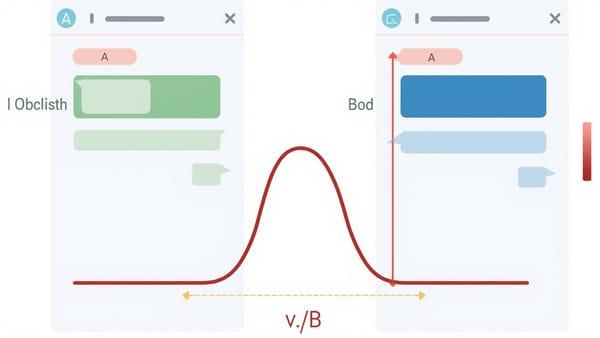
"The new prompt feels better" is not an evaluation strategy. Moving from GPT-4 to Claude, or changing a system prompt, requires rigorous A/B testing to make confident decisions — especially when the differences in quality are subtle and user impact is significant. This guide covers the statistical

AI Testing
Deploying an LLM is not a one-time event. Prompts change. Models get updated. Retrieval indexes get refreshed.

AI Testing
Every vendor in the testing space is marketing AI. "AI-powered," "intelligent automation," "autonomous testing" — the terminology is everywhere and most of it means very little. Meanwhile, a subset of these claims are describing real capabilities that genuinely change how testing works. The challenge

Test Automation
Quality observability means using data from production — real user behavior, errors, performance metrics — as direct input for your test suite. Instead of guessing which scenarios matter most, you test what users actually do. This guide covers how to implement quality observability using health checks, production monitoring, and feedback loops that