QA Engineer Career Path: From Junior to Senior to Lead
The QA engineering career has more defined progression levels than many people realize when they enter the field.

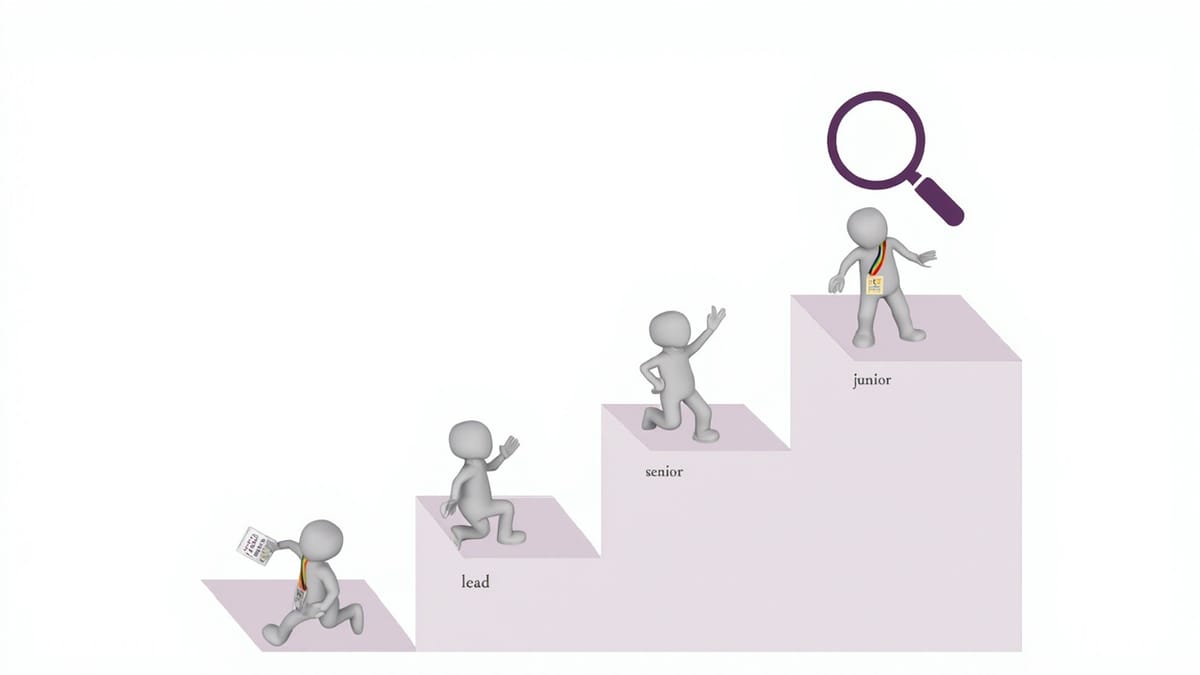
The QA engineering career has more defined progression levels than many people realize when they enter the field. Understanding what distinguishes each level helps you set realistic goals and know what to develop next.
The Career Ladder
| Level | Typical Years Experience | Focus |
|---|---|---|
| Junior QA Engineer | 0–2 years | Execution, learning |
| QA Engineer (Mid) | 2–5 years | Independence, breadth |
| Senior QA Engineer | 5–8 years | Strategy, depth, mentoring |
| QA Lead / Staff QA | 8–12 years | Team, systems, direction |
| QA Manager / Director | Variable | People, process, organization |
| Principal / Distinguished | 12+ years | Org-wide technical vision |
These are approximate — strong performers advance faster, and companies vary in how they define levels.
Junior QA Engineer (0–2 Years)
What's Expected
At the junior level, your job is to execute test cases, learn the product domain, and develop fundamental skills quickly. Expectations are calibrated accordingly.
Technical expectations:
- Execute manual test cases and document results accurately
- Write clear, reproducible bug reports with all required information
- Understand the product well enough to know when behavior looks wrong
- Use the team's test management tools (Jira, TestRail, etc.)
- Begin learning basic automation (scripting existing test cases)
- Understand API basics and can use Postman for API testing
Soft skill expectations:
- Ask questions before getting stuck too long
- Communicate blockers clearly and early
- Accept feedback constructively and implement it
- Be reliable: follow through on commitments, meet sprint commitments
Common Mistakes at This Level
- Writing vague bug reports ("button doesn't work") without context
- Declaring a feature "tested" after only testing the happy path
- Waiting for perfect understanding before starting work
- Not asking for reviews on test cases before executing them
- Automating too early before understanding the product behavior
How to Progress Beyond Junior
The clearest path to mid-level is demonstrating that you can work without constant supervision. Specifically:
- Take ownership of a feature from test planning to completion
- Write test plans, not just execute them
- Build or contribute meaningfully to automation
- Identify edge cases that weren't in the requirements
Timeline: most junior QAs reach mid-level in 1.5–2.5 years. Faster if they push hard on automation skills.
QA Engineer — Mid Level (2–5 Years)
What's Expected
Mid-level is where QA engineers become genuinely independent contributors. You're expected to handle a feature or component end-to-end without hand-holding.
Technical expectations:
- Write test plans and test strategies for features, not just execute someone else's plan
- Build and maintain automation — not just write tests, but structure frameworks properly
- Test at all levels: unit (review), integration (design and execute), system, acceptance
- Identify risks proactively and surface them before they become bugs
- Read and understand code well enough to find edge cases and ask smart questions
- API testing: go beyond happy paths to test error handling, auth edge cases, concurrency
Automation expectations specifically:
- Working knowledge of at least one UI framework (Playwright, Cypress, Selenium)
- Solid API automation (pytest/requests or similar)
- Can set up CI runs for tests
- Page Object Model or similar pattern applied correctly
- Basic debugging of flaky tests
Team contribution:
- Participate meaningfully in design and planning discussions
- Catch issues in requirements before development starts
- Help junior QAs when they're stuck
What Separates Mid from Senior
The gap between mid and senior is strategic thinking. A mid-level QA knows what to test on their assigned work. A senior QA thinks about what the team should be testing, what's missing from the overall test strategy, and what technical debt in the test suite will bite the team in 6 months.
Common Mistakes at This Level
- Staying comfortable with manual testing and not pushing deeper into automation
- Testing only what's assigned rather than proactively finding adjacent risks
- Treating QA as a gate at the end of development rather than integrated throughout
- Not building relationships with developers — the best testers have strong partnerships
Senior QA Engineer (5–8 Years)
What's Expected
At senior level, you're expected to make the team better, not just contribute individually. Your judgment is trusted for significant decisions.
Technical expectations:
- Design the test architecture and strategy for a service, feature area, or team
- Evaluate and introduce new testing tools and approaches
- Build test infrastructure that other engineers use
- Own the quality bar for an area — decide what's ready to ship
- Performance testing and analysis
- Security testing basics (understanding OWASP, can run basic security tests)
- Review junior and mid-level engineers' work and give substantive feedback
Leadership without title:
- Drive testing conversations in sprint planning and design reviews
- Advocate for quality investment with concrete business justification
- Mentor 1–3 junior/mid engineers
- Identify and address systemic quality problems, not just individual bugs
Communication:
- Can explain testing decisions to non-technical stakeholders
- Writes documentation that other engineers actually use
- Runs post-mortems with useful output
What Distinguishes Senior from Lead
Senior engineers are highly effective individual contributors. Leads multiply the team's effectiveness. A senior QA who moves toward lead starts taking on problems at the team or org level: what's the right testing strategy across services? How should QA be structured as the engineering team doubles?
QA Lead / Staff QA Engineer (8–12 Years)
The Technical Lead Path vs. Management Path
At this fork, careers diverge:
Technical Lead / Staff Engineer: Stays hands-on technically but operates at a larger scope. Sets technical direction, builds frameworks used by multiple teams, influences architecture decisions. Individual contributor with large organizational impact.
QA Manager: Transitions toward people management, process ownership, and organizational design. Reduces direct technical contribution in favor of enabling the team.
Most engineers are better suited for one than the other — self-assessment is important here.
Staff/Principal QA Engineer Expectations
- Own the test strategy for multiple teams or an entire product
- Drive technical investments (test infrastructure, tooling, platforms)
- Make build-vs-buy decisions for testing tools
- Reduce toil across the testing function through platform thinking
- Mentor senior engineers, not just juniors
- Represent QA in engineering leadership discussions
QA Manager Expectations
- Hire, develop, and retain a QA team
- Set team goals aligned with engineering and business goals
- Manage performance and career development
- Own team processes: sprint rhythm, incident response, on-call
- Report on quality metrics to engineering leadership
- Balance team workload and capacity
QA Manager / Director of Quality Engineering
The Transition to Management
Moving to management is not a promotion — it's a career change. Excellent individual contributors often struggle as managers because the skills overlap partially but not completely.
Good managers:
- Get satisfaction from others' success, not just their own
- Can hold difficult conversations about performance
- Understand technical enough to evaluate team work without doing it themselves
- Think in systems: process, culture, incentives, feedback loops
The IC→Manager switch often involves a temporary compensation dip at smaller companies, though it can accelerate at larger ones.
Director Level
Director-level QA leadership owns quality as an organizational function:
- Team structure and headcount planning
- Cross-functional relationships (with CTO, VP Engineering, product)
- Company-level quality strategy
- Quality metrics reported at the leadership level
- Balancing investment in QA vs. other engineering priorities
Skills That Matter at Every Level
Some skills distinguish high performers at every stage:
Communication: The ability to explain testing findings clearly, write compelling bug reports, and articulate quality risks to non-technical stakeholders. Often underinvested by technically strong testers.
Risk thinking: Approaching every feature or change with "what can go wrong and how bad would it be?" This is the core cognitive skill of QA. Develop it deliberately.
Domain expertise: Understanding the business domain deeply. A QA engineer who understands how healthcare claims work, or how financial transactions clear, will find bugs that generalists miss.
Tool fluency: Staying current with testing tools and being willing to learn new ones. The tooling ecosystem changes fast — staying 3+ years behind is a career risk.
Career Acceleration Strategies
1. Move toward automation early: The salary gap between manual-only and automation-capable QA engineers is 20–40%. Every year you delay deepening automation skills is a year of compounding opportunity cost.
2. Cross-pollinate with development: QA engineers who understand how production code is structured, how CI/CD pipelines work, and how databases are queried are significantly more effective. Invest time here.
3. Develop a specialty: Performance testing, mobile testing, security testing, AI/ML testing, infrastructure testing. Specialization commands premium compensation.
4. Build visibility: Blog posts, conference talks, open-source contributions. "Known for" status in a specific testing area opens career doors that pure technical competence alone doesn't.
5. Change companies strategically: Company transitions yield larger salary and level bumps than internal promotions at most organizations. Every 2–3 years, assess whether your current employer is still the right environment for your growth.
6. Learn the modern testing stack: Tools like HelpMeTest that combine AI-powered test generation with continuous monitoring represent where the industry is moving. Being conversant in modern approaches — and able to articulate their value to engineering leadership — accelerates career progression.
Summary: Level by Level Requirements
| Level | Must Have | Differentiator |
|---|---|---|
| Junior | Fundamentals, tools, reliability | Learning speed |
| Mid | Independence, basic automation, planning | Breadth + collaboration |
| Senior | Strategy, deep automation, mentoring | Impact beyond your work |
| Lead/Staff | Org-level thinking, platform building | Multiplying team effectiveness |
| Manager | People leadership, communication | Team culture and retention |
The through-line: at every level, the scope of responsibility expands. Junior QAs own their tasks. Mid QAs own features. Senior QAs own test strategy for a team. Leads own quality for a service or product. Managers own a team. Directors own a function.
Identify the scope you want to work at, understand what's required to operate there, and invest your learning time accordingly.