How to Test Your MCP Server Before Shipping

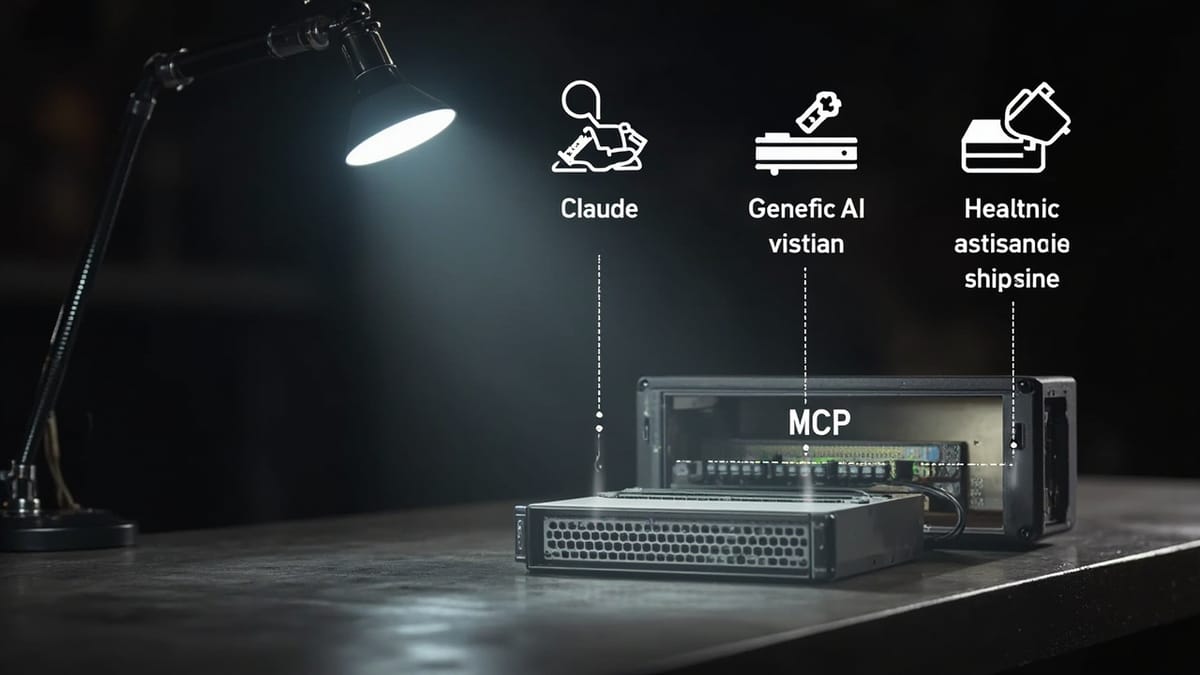
You built an MCP server. You tested it locally. Claude can call your tools. You're ready to ship.
Then a user pastes a prompt, your tool gets called with an edge-case input, and it silently fails. No exception. No error. The agent just gets back garbage and hallucinates a response around it.
This is the MCP testing problem: your server technically works, but you haven't verified it works correctly under real conditions.
What You Actually Need to Test
An MCP server exposes one or more tools. Each tool has a name, a description, and an input schema. Testing it sounds simple — call the tool, check the output. But the failure surface is wider than it looks.
Tool discovery. Does your server properly advertise its tools? Can clients enumerate them via tools/list? A malformed tools manifest means Claude never knows your tool exists.
Input validation. Your schema says a parameter is required. What happens when it's missing? What happens when it's the wrong type? What happens when it's an empty string instead of null? MCP servers that crash on bad input leave agents in an unrecoverable state.
Output format. MCP tool responses have a specific structure: content array, isError flag, text/image/resource types. A response that deviates from the spec may be silently ignored or cause the client to crash.
Error handling. The isError: true path is just as important as the happy path. Does your server return a useful error message, or does it return a stack trace? Does it return anything at all?
Concurrent calls. Agents are stateless and often call tools in parallel. Does your server handle concurrent requests? Does shared state get corrupted?
Timeout behavior. What happens when your tool takes longer than expected? Does the server hang? Does it return a partial result? Does it close the connection?
The Scope Problem
Here's what makes MCP server testing annoying: you need to test the integration, not just the implementation.
Unit testing the function that backs your tool is useful, but it doesn't tell you whether the MCP protocol layer is working correctly. The tool description, the input schema, the response format, the error codes — these all exist at the protocol layer, not the function layer.
You need a test that actually connects to your running MCP server, calls the tool through the protocol, and validates the response.
Most MCP server developers don't have this. They test manually in Claude Desktop, which is slow, non-reproducible, and can't run in CI.
Testing an MCP Server Manually
If you're in early development, the fastest way to verify your server is the MCP Inspector — a visual tool that lets you connect to any MCP server and call its tools interactively.
npx @modelcontextprotocol/inspectorPoint it at your server, enumerate the tools, call them with test inputs. This is good for exploratory testing and catching obvious issues, but it's manual and doesn't scale.
For more systematic testing, you can write test scripts using the MCP TypeScript SDK:
import { Client } from "@modelcontextprotocol/sdk/client/index.js";
import { StdioClientTransport } from "@modelcontextprotocol/sdk/client/stdio.js";

const transport = new StdioClientTransport({
  command: "node",
  args: ["your-server.js"],
});

const client = new Client(
  { name: "test-client", version: "1.0.0" },
  { capabilities: {} }
);

await client.connect(transport);

// List available tools
const tools = await client.listTools();
console.log("Tools:", tools.tools.map(t => t.name));

// Call a tool
const result = await client.callTool({
  name: "your-tool-name",
  arguments: { param: "test-value" }
});

console.log("Result:", result.content);
await client.close();This gets you protocol-level testing. You can add assertions and run it in CI.
What to Test for Each Tool
For each tool in your MCP server, write tests for these scenarios:
Happy path. Call the tool with valid inputs. Assert the response has the expected structure and content. This is table stakes.
Required field missing. Omit a required parameter. Your server should return isError: true with a clear message, not throw an unhandled exception.
Wrong type. Pass a number where a string is expected, or vice versa. MCP clients do type coercion in unpredictable ways — your server should handle this gracefully.
Empty/null values. Empty strings, null, empty arrays. These are common sources of silent failures.
Large inputs. If your tool accepts text, test it with very long strings. If it accepts arrays, test with large arrays. Find the limits before your users do.
Concurrent calls. Call the same tool from multiple parallel clients. Verify results are consistent and there's no state corruption.
Slow responses. If your tool calls an external API, what happens when that API is slow? Does the client wait? Does it timeout? Does it retry?
Schema Testing
Your tool schema is how Claude decides when and how to call your tool. Test it too.
The description field is especially important. A vague description leads to the tool being called at the wrong time with the wrong parameters. Write the description as a specification and test that:
- The description accurately describes what the tool does
- Each parameter description is specific enough that an LLM would call it correctly
- Examples in the description (if any) are actually valid inputs
You can validate your schema structure programmatically:
// Validate the schema is well-formed
const tools = await client.listTools();
for (const tool of tools.tools) {
  assert(tool.name, "Tool must have a name");
  assert(tool.description, "Tool must have a description");
  assert(tool.inputSchema, "Tool must have an inputSchema");
  assert(tool.inputSchema.type === "object", "inputSchema must be an object type");
}Integration Testing with a Real Agent
Protocol testing catches structural issues. Behavioral testing catches semantic ones.
A tool that correctly validates inputs and returns well-formed responses can still behave incorrectly in practice — if the output format confuses the agent, if the tool description leads to wrong usage, if the output triggers unwanted follow-up tool calls.
To test this, you need to exercise your MCP server through a real agent. Set up a test where:
- You connect Claude (or another MCP client) to your server
- You give it a specific task that requires using your tool
- You verify the outcome, not just the tool call
This is where HelpMeTest comes in. HelpMeTest has native MCP integration — start the server with helpmetest mcp, connect Claude Code or Cursor, and use natural language to write tests that exercise your MCP server through a real agent loop.
Navigate to your app, trigger the workflow that uses your MCP tool,
verify the result appears correctly on the page.These tests run in CI, catch regressions, and verify the full stack — from the MCP protocol layer down to the UI showing the result.
CI/CD for MCP Servers
Your MCP server should have the same CI/CD discipline as any API. On every pull request:
- Run unit tests on the underlying functions
- Run protocol tests against the running server (tool list, schema validation, happy path per tool)
- Run error handling tests (bad inputs, missing fields, type errors)
- Run at least one integration test through a real agent
This doesn't require a lot of infrastructure. A test script that spins up your server, exercises it via the MCP SDK, and exits with a non-zero code on failure is enough to block a bad deploy.
# package.json
"scripts": {
  "test:unit": "vitest",
  "test:mcp": "node tests/mcp-protocol.test.js",
  "test:integration": "helpmetest run mcp-integration",
  "test": "npm run test:unit && npm run test:mcp && npm run test:integration"
}The Versioning Problem
MCP is evolving. Schemas change. Tool signatures change. Parameter names change.
Every breaking change you make to a tool is a breaking change for every agent that has learned to call it. Unlike a REST API where you can version the endpoint, MCP tool names are global and unversioned.
Test your server against the last released version before every deploy. If you remove a parameter, add a test that sends the old parameter and verifies graceful handling. If you rename a tool, keep the old name as an alias until you know all clients have updated.
What Breaks in Production
The failures we see most often in MCP servers running in production:
Unhandled promise rejections. An async tool throws, nobody catches it, the server sends a malformed response or closes the connection. Agent gets confused.
Race conditions in stdio transport. Multiple concurrent tool calls over the same stdio connection can interleave their output. Test concurrent calls explicitly.
Missing error details. isError: true with no message is worse than a crash — it tells the agent something went wrong but not what. The agent retries. And retries. And retries.
Overpromising in the description. The tool description says it can handle X, but it can't. Claude calls it expecting X, gets something else, and either hallucinates around it or enters a loop trying to make it work.
Schema mismatch. Your schema says the output is a string. You return an object. Some MCP clients handle this gracefully, others don't.
Test all of these explicitly. Add them to your test matrix before your first production user finds them.
MCP servers are infrastructure. They need the same testing rigor as any service that other systems depend on. The difference is that the clients are AI agents — and when they hit an unexpected failure, they don't crash cleanly. They work around it in ways you didn't anticipate.
Test your server before Claude does.