Managing Technical Debt in Test Suites: Refactoring and Flaky Test Elimination

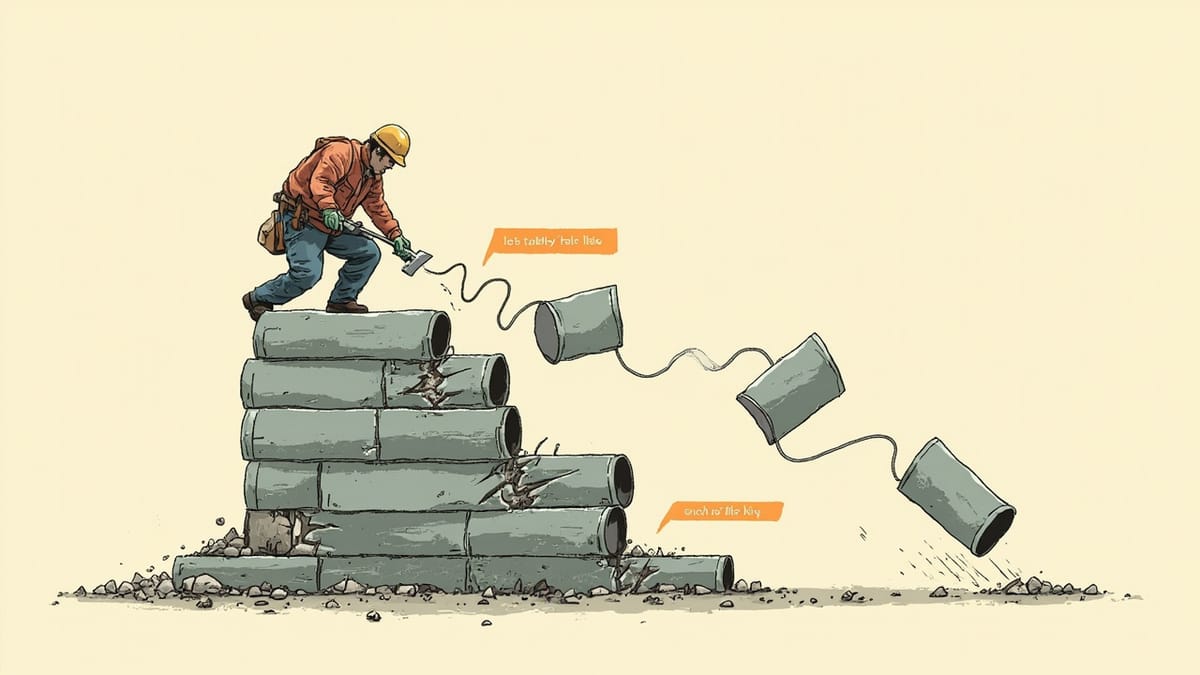
Test debt is the accumulated cost of deferred test maintenance — slow suites, flaky tests, duplicate coverage, and dead tests that no longer verify anything meaningful. Unlike production code debt, test debt is often invisible until it causes a crisis. This guide provides a systematic framework for identifying, measuring, and eliminating test debt before it makes your CI pipeline unreliable.
Key Takeaways
Test debt has a measurable cost per day. Calculate it: flaky test false-positive rate × engineer investigation time × run frequency. Most teams are spending 5–15 engineer-hours per day on debt they don't see.
Flaky tests have four root causes, each requiring a different fix. Timing, environment, data, and ordering are distinct categories with distinct solutions — treating all flakiness as "add a wait" is how suites become permanently unreliable.
Delete tests aggressively. A test that hasn't caught a bug in 12 months and duplicates coverage elsewhere is consuming maintenance budget with no return. Delete it.
Refactoring follows the same rules as production code refactoring. Make test code a first-class citizen: code review, naming standards, duplication limits, and regular refactoring cycles.
Test debt sprints only work if they produce metrics. A sprint that doesn't track flaky rate before and after, execution time before and after, and maintenance time saved is a week of activity with no accountability.
What Test Debt Looks Like
Test debt is not just "tests we haven't written yet." It's the accumulated maintenance burden from tests that were written without adequate care, have become stale over time, or were never fit for purpose.
The most common forms:
Slow suites: A full regression run that takes 60 minutes is debt. Engineers stop running it locally. CI pipelines back up. The gap between code change and test result grows, reducing the value of the feedback. Slow suites accumulate because individual tests are added without considering their runtime impact, and because parallelization is deferred until the problem is severe.
Flaky tests: Tests that pass and fail without code changes. At 2–3%, flakiness is a nuisance. At 10–15%, it's a crisis — engineers stop trusting test failures and start reflexively re-running. When re-running is the default response to test failures, the suite has lost its ability to provide reliable signal.
Duplicate coverage: Two tests that verify the same behavior. Not the same feature — the exact same assertion through the same code path. Duplicate coverage doubles the maintenance cost without increasing confidence. It accumulates when teams grow, multiple engineers independently add tests for the same feature, and there's no review process for coverage overlap.
Dead tests: Tests that no longer verify anything meaningful. The feature was deleted and the test was orphaned. The assertion was changed to assertTrue(true) to make a failing test pass during a deadline crunch. The test verifies implementation details that are no longer accurate. Dead tests are worse than missing tests — they consume maintenance budget and produce false confidence.
Over-specified tests: Tests that assert too many implementation details and not enough behavior. A test that verifies the exact order of 15 properties in a JSON response will break every time the response schema evolves, even if the behavior is unchanged. Over-specified tests create maintenance drag that discourages refactoring.
Measuring the Cost of Test Debt
Test debt is easy to ignore because its costs are distributed across many engineers and spread over time. Making the cost visible is the prerequisite for getting organizational support to pay it down.
The Daily Debt Cost Formula
For flaky test debt specifically:
Daily flaky test cost = (flaky test count × failure rate) × (average investigation time per failure) × (CI runs per day)
Example: 200 flaky tests with a 15% failure rate × 10 minutes investigation time per failure × 20 CI runs per day = 600 minutes, or 10 engineer-hours per day spent investigating false test failures.
At a fully-loaded engineer cost of $150/hour, that's $1,500/day, or $390,000/year of engineer time spent on false failures from flaky tests.
This calculation should be in your test debt pitch to engineering leadership. It converts abstract technical debt into a concrete budget number.
The Maintenance Overhead Calculation
For each test, estimate: how many times per sprint does this test require maintenance (selector updates, data refreshes, timing adjustments, assertion updates)? Multiply by the average time to make that maintenance update.
A suite of 500 E2E tests with an average maintenance cycle of 0.5 hours per test per quarter requires 250 engineer-hours of maintenance per quarter — more than 6 full engineer-weeks. If this maintenance work is happening but not being tracked, it's invisible in sprint planning and gets absorbed into other tickets, masking the true cost of the test suite.
The Pipeline Throughput Cost
A slow test suite that blocks CI creates a queuing problem. If your test suite takes 45 minutes and your team pushes 10 PRs per day, you need parallel execution capacity to avoid a pipeline backlog. Calculate the opportunity cost: delayed PR feedback means slower cycle time, which means slower feature delivery.
Track the average time from "test triggered" to "PR unblocked" across your team. This is your true pipeline latency. The gap between this number and your target (15 minutes for most organizations) is the cost of execution time debt.
Flaky Test Taxonomy
Flaky tests are not a monolithic problem with a single solution. Understanding the root cause is essential to fixing rather than suppressing the symptom.
Category 1: Timing Flakiness
Characteristics: Test passes when run slowly (locally, with debugger attached), fails when run fast (CI, parallel execution). Failure mode is often ElementNotFoundError, TimeoutError, or assertion failures on async state.
Root causes:
- Implicit waits that are insufficient under CI load
- Assertions on state that is populated asynchronously
- Race conditions between test setup and the behavior being tested
- Animations and transitions that haven't completed
Correct fixes:
- Replace implicit waits with explicit waits on observable state: wait for the element to be visible, not for N milliseconds to elapse
- Use event-driven synchronization: wait for the HTTP response, not for the loading spinner to disappear
- Fix the production code race condition if the timing dependency exists in the product, not just the test
Incorrect fix: sleep(2000). This makes the test slower and still flaky at high load. It also masks production race conditions that real users will encounter.
Category 2: Environment Flakiness
Characteristics: Test passes consistently in one environment (local, staging) and fails intermittently in another (CI, production-mirror). Failures correlate with infrastructure conditions — CPU load, network latency, container startup time.
Root causes:
- Tests that depend on network calls to external services (third-party APIs, CDNs)
- Tests that depend on system clock precision
- Tests that depend on file system state that varies between environments
- Tests that depend on services being "ready" without explicit readiness checks
Correct fixes:
- Mock or stub external service calls at the test boundary — tests should not make real network calls to third-party services
- Replace clock-dependent assertions with relative time assertions or dependency-injected clocks
- Add explicit readiness checks (health endpoint polling) before tests that depend on service startup
- Use testcontainers or similar to get consistent environment state
Category 3: Data Flakiness
Characteristics: Test passes on first run, fails on subsequent runs without code changes. Failure mode is often "record already exists" or assertion failures on state that was modified by a previous test run.
Root causes:
- Tests that share database state with other tests
- Tests that create data without cleaning up
- Tests that depend on specific data existing in the database
- Ordering dependencies between tests (test B assumes test A ran first and created specific data)
Correct fixes:
- Each test manages its own data: create what it needs in setup, delete it in teardown
- Use database transactions that roll back at test end rather than explicit deletion
- Generate test-specific unique identifiers rather than fixed values
- Use test data factories that generate fresh, unique data per test run
Incorrect fix: Test ordering guarantees. Relying on tests to run in a specific order to manage data state is a fragile anti-pattern that breaks whenever parallelization is introduced.
Category 4: Ordering Flakiness
Characteristics: Tests pass individually, fail as a suite. Failures vary depending on which tests ran before. Particularly common after parallelization is introduced.
Root causes:
- Shared global state (singletons, global variables, static state) modified by one test and expected unmodified by another
- Browser/application state that persists between tests (logged-in session, cached data)
- Database state shared between tests without proper isolation
Correct fixes:
- Eliminate shared global state. Each test must initialize the state it depends on.
- Implement proper test isolation: logged-out state between tests that manage their own login, cleared caches, reset database state
- Use the Arrange-Act-Assert pattern strictly: every test arranges its own prerequisites
Systematic Flaky Test Elimination
Flaky test elimination requires a systematic process, not individual heroics. Ad-hoc flakiness fixes ("I'll fix that when I have time") produce incremental improvement that is offset by new flakiness accumulating faster.
Step 1: Detection and Cataloging
You cannot eliminate flakiness you haven't measured. Implement a flaky test detection mechanism:
Re-run-on-failure tracking: Every time a test fails and then passes on retry without a code change, record that event. After 30 days, you have a ranked list of your flakiest tests.
Flaky rate reporting: For each test, calculate: failure rate across all runs where the test result was later overridden by a re-run. Sort descending. The top 20 tests on this list are your first target.
Most modern test reporting tools (Allure, pytest-html, built-in Playwright reporters) can be extended to capture this data. Some CI platforms (Buildkite, CircleCI) have built-in flakiness detection.
Step 2: Quarantine
Before fixing, quarantine flaky tests. Quarantine means: the test still runs, but its failure does not block the pipeline. Instead, failures are logged and reported separately.
Quarantine serves two purposes: it removes the daily interrupt cost of investigating false failures while the fix is in progress, and it generates clean flakiness data without the noise of code-change-related failures.
A quarantined test has a deadline. Tests in quarantine for more than 2 weeks that haven't been fixed should be deleted. A quarantined test that's been in quarantine for a month has become a permanent exception — and a permanent exception provides no quality signal.
Step 3: Root Cause Analysis
For each flaky test, determine its category (timing, environment, data, ordering) using the criteria in the taxonomy above. The category determines the fix approach.
Document the analysis before writing code. For team learning purposes, a brief write-up ("test X is timing-flaky because the loading state assertion runs before the API call completes — fix is to wait for the network request to resolve") is more valuable than a code change with no explanation.
Step 4: Fix, Verify, and Promote
Apply the fix. Then run the fixed test 20–50 times in isolation to verify that the flakiness rate has dropped to zero (or near zero). A fix that reduces flakiness from 20% to 5% is not a fix — it's a band-aid.
After verification, promote the test out of quarantine. Track its flakiness rate for two weeks post-fix to confirm the fix held.
Refactoring Strategies
Test code deserves the same refactoring discipline as production code. The common objection — "tests are just tests, they don't need to be clean" — is how you accumulate the maintenance debt that eventually makes people question whether automation is worth doing at all.
Page Object Consolidation
The page object pattern (encapsulating UI element locators and interactions in a class) is the most common test architecture pattern for UI automation. Over time, page objects accumulate:
- Duplicate selectors for the same element (three places define
loginButton) - Stale selectors that no longer match the DOM
- Monolithic page objects that cover an entire application in a single class
- Page objects split by file rather than by user interaction domain
Consolidation approach: Audit all page objects. Identify duplicate selectors. Standardize selector naming. Split monolithic page objects by feature area, not by page URL (features often span multiple URLs). Move selectors to a single authoritative location with a naming convention that makes their purpose clear.
Fixture Extraction
Fixtures — test data and environment setup — are frequently duplicated across test files. Team A creates a testUser in their test file; Team B creates an identical testUser in theirs. When the user schema changes, both must be updated.
Extraction approach: Identify fixture patterns that appear in multiple test files. Extract them into shared fixture modules or factories. Use parameterization rather than duplication — a single createUser(options) factory covers all the variants that ten duplicate fixture definitions were covering individually.
Test Data Factories
A test data factory generates valid, unique test data on demand. Instead of hardcoded test users, products, and orders spread across fixtures, a factory produces them:
// Instead of:
const user = { email: "test@example.com", password: "password123", name: "Test User" };

// Use:
const user = UserFactory.create(); // generates unique email per invocation
const adminUser = UserFactory.create({ role: "admin" });This pattern eliminates data collision between parallel test runs, removes hardcoded values that break when validation rules change, and makes test intent clearer (you're testing "an admin user" not "the specific user with this exact email").
When to Delete Tests vs Fix Them
Not all test debt should be fixed. Some tests should be deleted.
Delete when:
- The feature or behavior the test verifies has been removed from the product
- The test duplicates coverage that exists in a better-structured test
- The test has been quarantined for more than 2 weeks without a fix path
- The test verifies an implementation detail (specific method was called with specific arguments) rather than a behavior (the user can complete the action)
- The test has a flaky rate above 30% and fixing it would require significant refactoring of production code
Fix when:
- The test verifies critical behavior that isn't covered elsewhere
- The fix is clearly scoped (timing issue, data cleanup, selector update) and will take less than 2 hours
- The test is currently blocking valid failure detection (i.e., when it works correctly, it catches real bugs)
Rewrite when:
- The test is fundamentally mis-designed (testing implementation, not behavior; over-specified assertions; no isolation)
- The fix would require changing more than 70% of the test code
Organizing a Test Debt Sprint
A test debt sprint is a focused, time-boxed investment in paying down accumulated test debt. Done correctly, it produces measurable outcomes. Done incorrectly, it's a week of activity with no lasting impact.
Before the Sprint
Measure the baseline. Record: total flaky test count and rate, P95 suite execution time, test count by layer, maintenance hours logged in the previous sprint. These are your before metrics.
Prioritize debt items. Rank by: daily cost (flaky tests that block CI most frequently get highest priority), fix effort (quick wins first to build momentum), and risk (debt in high-traffic areas of the product gets higher priority than debt in rarely-used features).
Set specific targets. "Reduce flaky test count by 50%" is a measurable target. "Improve test suite health" is not.
During the Sprint
Pair on hard flakiness investigations. Timing and environment flakiness often requires two engineers to diagnose — one running the test in different conditions while the other traces the code path. Don't have individuals struggle alone.
Use mob programming for refactoring decisions. When deciding whether to delete, fix, or rewrite a test, a quick 30-minute group decision session is faster and produces better outcomes than individual decisions that get challenged in code review.
Track progress daily. A burn-down chart of flaky test count gives the team a clear signal of whether they're on track and keeps momentum.
After the Sprint
Measure the after. Compare to the before metrics. Calculate the daily debt cost reduction. Present the result to engineering leadership.
Prevent re-accumulation. Establish the policies that prevent debt from re-accumulating: mandatory quarantine for new flaky tests within 48 hours, code review checklist item for test quality, maximum flaky test rate as a quality gate. Without these policies, you'll be running the same sprint again in 6 months.
Tracking Progress with Metrics
The three metrics that matter for test debt:
Flaky test rate (tracked weekly): The percentage of test runs in any given week that contain at least one failure later overridden by a re-run. Target: below 2%. Alert: above 5%.
P95 execution time (tracked weekly): The 95th percentile of full suite execution time. Tracks toward or away from your target execution time. Sudden spikes indicate a newly added slow test or infrastructure degradation.
Maintenance time per sprint (tracked per sprint): Engineer hours spent on test maintenance (fixing broken tests, updating selectors, refreshing test data). Track this explicitly in your sprint tracking system. A maintenance time that's growing week-over-week indicates debt accumulation faster than repayment.
Display these three metrics on your team's shared dashboard alongside production metrics. Test debt should be as visible as production defect rate — it's a leading indicator that predicts future production quality.