Fuzz Testing Guide: What It Is, Why It Matters, and How It Finds Bugs

Fuzz Testing Guide: What It Is, Why It Matters, and How It Finds Bugs

Heartbleed. Log4Shell. The Stagefright vulnerability. A disproportionate number of the most severe security vulnerabilities in recent history share one thing in common: they would have been caught by a fuzzer. Fuzz testing — fuzzing — is one of the most effective bug-finding techniques ever discovered, yet most development teams never use it.

This guide explains what fuzzing is, how it works, which tools are available, and why adding even a little fuzzing to your test suite can find bugs that years of manual testing and code review missed.

What Is Fuzz Testing?

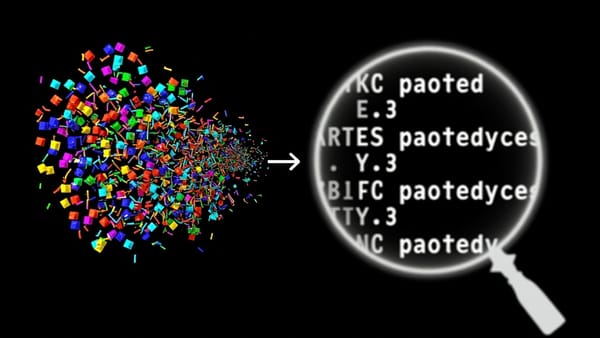
Fuzz testing (or fuzzing) is an automated testing technique that feeds randomly generated, malformed, or unexpected inputs to a program and watches for crashes, hangs, assertion failures, and other anomalous behavior.

The core insight: software bugs often live in input parsing and handling code. When you write unit tests, you test the inputs you thought of. Fuzzers test the inputs you didn't think of.

A basic fuzzer might look like this conceptually:

while True:
    input_data = generate_random_bytes()
    result = run_program(input_data)
    if result.crashed:
        save_input_to_corpus(input_data)
        alert("CRASH FOUND")

But modern production-grade fuzzers are far more sophisticated than random input generators.

Coverage-Guided Fuzzing: Why It Works

Naive random fuzzing is inefficient. Most random byte sequences won't trigger interesting code paths — they'll just fail input validation immediately.

Coverage-guided fuzzing solves this by instrumenting the target program at compile time. The fuzzer observes which branches and code paths each input exercises. Inputs that trigger new code paths are added to a "corpus" (seed collection) and mutated further. Inputs that don't discover new paths are discarded.

This creates a feedback loop:

  ┌─────────────────────────────────────────────┐
  │                                             │
  │  Corpus → Mutate → Run → Measure Coverage  │
  │              ↑                    │         │
  │              └──── New coverage ──┘         │
  └─────────────────────────────────────────────┘

The result is a fuzzer that "learns" what inputs make the program do interesting things and evolves its test cases toward unexplored code. Given enough time, coverage-guided fuzzers achieve remarkably high code coverage — and find the bugs hiding in the rarely-executed branches.

Types of Vulnerabilities Fuzzers Find

Memory safety bugs (C/C++):

  • Buffer overflows
  • Use-after-free
  • Integer overflows leading to incorrect memory allocation
  • Out-of-bounds reads and writes
  • Heap corruption

Logic errors (all languages):

  • Denial of service via malformed input
  • Infinite loops / hangs on edge-case input
  • Incorrect output for unusual but valid input
  • Off-by-one errors

Parsing failures (all languages):

  • Parser crashes on malformed data
  • Inconsistent behavior between serialization and deserialization
  • Integer overflow in size calculations

Security vulnerabilities:

  • SQL injection vectors that bypass validation
  • XML/JSON injection
  • Path traversal in filename handling
  • SSRF via URL parsing edge cases

The Major Fuzzing Tools

AFL++ (American Fuzzy Lop Plus Plus)

AFL++ is the most widely used coverage-guided fuzzer. It supports C, C++, Rust, Python, Go, and more. It discovered thousands of bugs in widely-used open-source software.

Strengths: Mature, well-documented, massive ecosystem, custom mutators, network protocol fuzzing support.

Best for: C/C++ programs, system software, parsers, file format handlers.

libFuzzer

libFuzzer is built into LLVM/Clang. Unlike AFL++ which runs as a separate process, libFuzzer runs the fuzz target as a library within the fuzzing engine — enabling extreme performance.

Strengths: Very fast, deep Clang integration, easy sanitizer support, in-process execution.

Best for: C/C++ libraries, cryptographic code, parsing libraries.

go-fuzz / native Go fuzzing

Go 1.18+ includes native fuzzing support (go test -fuzz). Before that, dvyukov/go-fuzz was the standard.

Strengths: Zero additional tooling, integrated with go test, finds real bugs in the standard library.

Best for: Go libraries, network protocol handlers, anything that parses untrusted input.

cargo-fuzz (Rust)

Cargo-fuzz uses libFuzzer under the hood, integrated with Rust's cargo toolchain. Combined with Rust's memory safety model, it focuses on logic bugs and panics rather than memory corruption.

Strengths: Seamless Rust integration, finds panics and logic errors, excellent sanitizer support.

Best for: Rust libraries, serialization code, parsers.

Hypothesis (Python)

Hypothesis is technically a property-based testing library, not a fuzzer — but it uses fuzzing-like techniques (random input generation, shrinking, corpus persistence) to find bugs. It's the most accessible entry point for developers new to these techniques.

Strengths: No compilation step, readable tests, automatic shrinking to minimal counterexample, integrates with pytest.

Best for: Python code of any kind — APIs, data processing, business logic.

What Fuzzing Is Not

Fuzzing is not a replacement for:

  • Unit tests (they verify specific expected behavior)
  • Integration tests (they verify component interactions)
  • Code review (it can't detect logic errors that don't crash)
  • Manual security testing (it can't understand business logic)

Fuzzing is a complement — it finds the bugs that fall through the cracks of everything else.

Getting Started: The Minimal Fuzz Setup

You don't need to fuzz everything. Start with:

  1. Input parsers: Any code that parses external data (JSON, XML, CSV, binary formats, URLs, file paths)
  2. Deserialization: Pickle, YAML load, JSON decode, protobuf parse
  3. Cryptographic code: Not for the crypto primitives, but for key parsing, certificate handling, etc.
  4. Network protocol handling: Anything that processes packets, headers, or protocol messages

The ratio of effort to bugs found is extremely favorable in these areas.

A 10-Minute Python Start with Hypothesis

from hypothesis import given, strategies as st
import json

def parse_config(config_str: str) -> dict:
    """Parse a JSON config string. Should never crash."""
    try:
        data = json.loads(config_str)
        if not isinstance(data, dict):
            raise ValueError("Config must be a JSON object")
        return data
    except json.JSONDecodeError:
        return {}

@given(st.text())
def test_parse_config_never_crashes(config_str):
    # If this raises anything other than ValueError, it's a bug
    try:
        parse_config(config_str)
    except ValueError:
        pass  # Expected for invalid configs
    # Any other exception = bug found

Run with: pytest test_config.py

Hypothesis will generate thousands of inputs, find edge cases, and if it finds a crashing input, it will shrink it to the minimal example that reproduces the bug.

Fuzzing vs Traditional Testing: The Numbers

Google's OSS-Fuzz project has run continuous fuzzing on hundreds of open-source projects since 2016. As of 2024, it has found over 10,000 vulnerabilities and over 36,000 bugs — in software that was already extensively tested, code-reviewed, and battle-hardened by real-world use.

The lesson: conventional testing leaves a substantial number of bugs undiscovered. Fuzzing systematically explores the input space in ways humans don't.

Integrating Fuzzing into CI/CD

Fuzzing in CI requires some thought:

  • Don't run fuzzers for their full duration in CI: Run for a fixed time budget (30s–5min), then stop
  • Maintain a corpus: Seed the fuzzer with previously found interesting inputs so it doesn't start from scratch
  • Run regression tests on corpus: Add found crash inputs as fixed regression tests
  • Use sanitizers in CI: ASAN (AddressSanitizer) and UBSAN catch many bugs that would otherwise be silent
# GitHub Actions — 5-minute fuzz budget
- name: Run fuzzer
  run: |
    go test -fuzz=FuzzParseConfig -fuzztime=5m ./...

From Fuzzing to Continuous Testing

Fuzz testing finds crashes and edge cases — but bugs that don't crash require active testing assertions. Once a fuzzer identifies a suspicious input, you need tests that verify the correct output.

HelpMeTest complements fuzzing by running continuous end-to-end tests against your live application. Where fuzzing explores inputs at the unit level, HelpMeTest verifies that real user workflows work correctly 24/7 in production. Together, they cover different parts of the reliability spectrum. No code required for HelpMeTest — write tests in plain English.

Summary

Fuzz testing is one of the highest-leverage bug-finding techniques available. It finds real vulnerabilities — the kind that make security advisories — in code that has been reviewed and tested by experienced engineers. The tools are mature, free, and increasingly easy to use:

  • AFL++: C/C++ and most compiled languages
  • libFuzzer: C/C++ libraries with LLVM
  • go test -fuzz: Go code, native and simple
  • cargo-fuzz: Rust code
  • Hypothesis: Python, accessible to any developer today

Start with Hypothesis if you're new to the space — you can add a fuzz test in 10 minutes without any new tooling. Then explore AFL++ or cargo-fuzz for your most critical parsing code.

The question isn't whether fuzzing will find bugs in your codebase. It will. The question is whether you find them first.

Read more