
AI Testing Tools That Don't Need Your Source Code

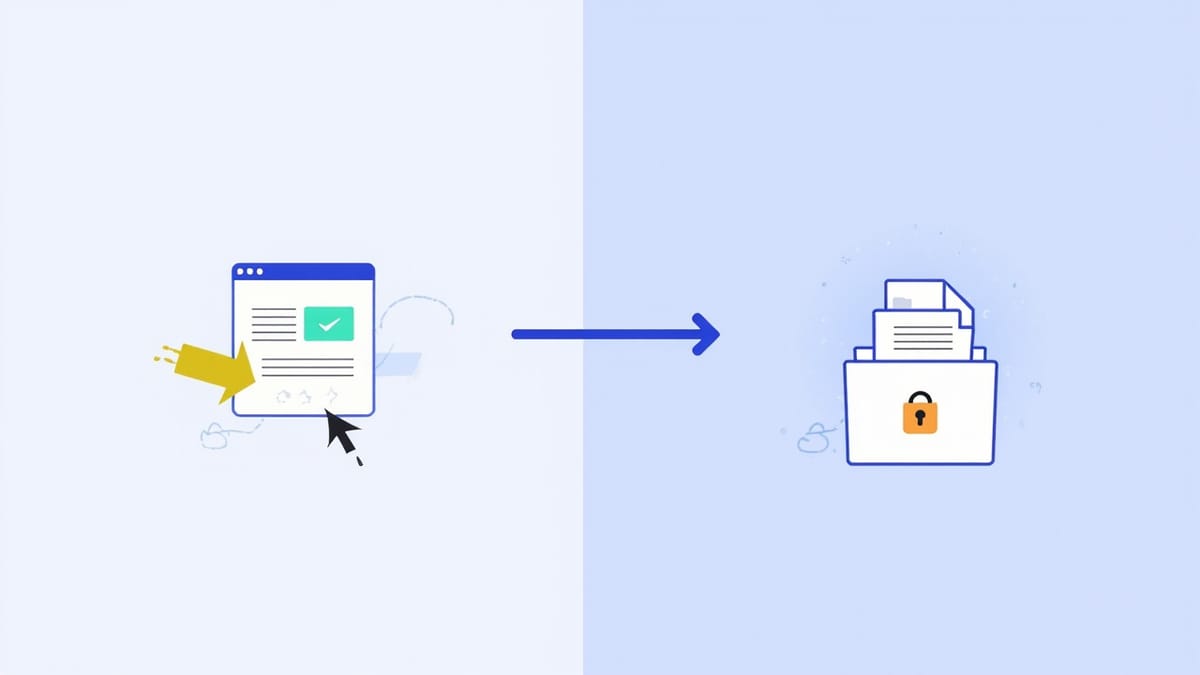
A new wave of AI QA tools — led by Canary (YC W26) — requires read access to your entire codebase before they can write a single test. That's a real tradeoff — and for many teams, it's a dealbreaker. Browser-based AI testing tools like HelpMeTest achieve the same outcome (automated QA coverage) by working from outside the application, the way a real user would. No code access required.
Key Takeaways
Source code access is not required for effective AI testing. Browser-based tools test your application from the outside, which is how users actually experience it — and catches the bugs that matter.
Code-access tools are optimized for engineers. If your team is comfortable granting repository access to a third-party AI service, they're powerful. If not, you're blocked before you start.
Zero-code setup means QA doesn't require a developer. PMs, QA leads, and founders can write and run tests without writing a line of code or understanding your architecture.
Browser-based AI testing is production-accurate. Testing through the UI is the highest-fidelity signal of whether something works. It doesn't matter what the code looks like — what matters is what the user sees.
HelpMeTest works in 5 minutes, no repo access, $0 to start. Write a test in plain English, point it at your URL, get results.
The Source Code Access Problem
In early 2026, several well-funded AI testing tools — most notably Canary, the YC-backed AI QA engineer — launched with a compelling pitch: give us access to your codebase, and we'll understand your application deeply enough to generate perfect tests.
The pitch is real. Code-aware AI can understand component structure, trace user flows through function calls, and generate tests that reflect actual implementation logic.
The tradeoff is also real.
Granting source code access means:
- A third-party AI service can read your entire codebase
- Your proprietary business logic, API keys in config files, architectural decisions
- Ongoing access as your code changes
- A new attack surface in your security model
For open-source projects or internal prototypes, this might be fine. For a startup with a proprietary product, a regulated industry, or just a healthy skepticism about third-party data access, it's a significant decision.
And for non-technical founders, PMs, and QA leads — it's often not even their decision to make. They don't have repo access to grant.
How Browser-Based AI Testing Works Differently
Browser-based AI testing tools don't need your source code because they work from the outside — the same way a user does.
Instead of reading your React components, the tool:
- Opens a browser and navigates to your URL
- Observes the page — DOM structure, interactive elements, visible text
- Generates or executes test steps based on what a user would do
- Reports pass/fail based on observable behavior
This approach has been the foundation of end-to-end testing (Playwright, Selenium, Cypress) for years. AI adds test generation, self-healing, and visual analysis on top of that proven foundation.
The result: no repo access, no setup beyond a URL, full coverage of what users actually experience.
Comparison: Code-Access vs Browser-Based AI Testing
| Code-Access AI Testing | Browser-Based AI Testing | |
|---|---|---|
| Requires source code | Yes — read access to repo | No — only a URL |
| Who can use it | Engineers with repo access | Anyone — PM, QA, founder |
| Setup time | Hours (repo integration, config) | Minutes (enter URL, write test) |
| Test generation input | Your codebase structure | Your running application |
| Tests non-engineers can write | No | Yes |
| Works on any tech stack | Depends on language support | Yes — tests the browser, not the code |
| Security requirement | Third-party code access | None beyond normal web access |
| Continuous monitoring | Typically no | Yes |
| Pricing model | Usually custom/enterprise | From $0/month |
Canary: The Highest-Profile Code-Access AI Testing Tool
Canary (YC W26) is the most prominent example of the code-access approach in 2026. Founded by ex-Windsurf, Cognition, and Google engineers, Canary connects to your GitHub or GitLab repository, reads your codebase to understand routes, controllers, and validation logic, then generates and runs Playwright tests against your preview environment when PRs are opened — posting results as PR comments.
The pitch: AI that understands developer intent, not just DOM structure. When a PR changes a checkout flow, Canary reads the diff, understands what changed in the implementation, and generates tests that reflect that change.
When Canary works well:
- Engineering teams where QA is owned by developers
- Codebases where repo access to a third-party is acceptable
- Teams with preview environments already set up
- PR-centric workflows where test feedback at merge time is the goal
When Canary doesn't fit:
- Non-technical QA stakeholders who don't have repository access
- Regulated industries where third-party code access fails compliance review
- Closed-source products with strict IP or data security requirements
- Teams that need continuous production monitoring (not just PR-triggered tests)
- Organizations that need public self-service pricing
Canary's pricing is not publicly listed. If your team evaluated Canary but couldn't proceed because of the source code requirement, the pricing model, or the engineers-only workflow — read on.
What Code-Access Tools Are Good For
To be fair: code-access AI testing tools (Canary and others) have real advantages in specific contexts.
Unit test generation. If you want AI to write unit tests that import and call your functions directly, the tool needs to read your code. Browser-based tools can't do this.
Deeply integrated CI workflows. Tools that understand your codebase can generate tests tied to specific pull requests — testing exactly what changed.
Enterprise engineering teams. Large teams with mature security review processes, standardized stacks, and dedicated engineers to manage the integration will get real value from code-aware tools.
If that's your context and your security team approves, these tools are worth evaluating.
What Browser-Based Testing Is Good For
For most teams — especially startups, small engineering teams, and anyone with a non-technical QA function — browser-based testing wins on nearly every practical dimension.
Scenario: Startup with 3 engineers
- No dedicated QA engineer
- No time to set up a code-access integration
- Need tests running in CI and monitoring production 24/7
- Budget: $100/month
Browser-based AI testing covers all of this. Code-access tools don't fit the budget or team structure.
Scenario: PM wants to write acceptance tests
- New feature going to production next week
- PM wants to write: "When a user checks out, they see an order confirmation"
- No coding experience
With HelpMeTest, that's a plain-English test written in 2 minutes. Code-access tools require the PM to work through an engineer.
Scenario: You're testing a third-party integration
- Your app uses Stripe, Intercom, a third-party auth provider
- You can't give an AI tool access to Stripe's codebase
- You need to test the integration works end-to-end
Browser-based testing is the only option here. You test what the user sees.
HelpMeTest: Browser-Based AI Testing Without Code Access
HelpMeTest is built on this model. Tests are written in plain English (or with AI assistance), run against your live URL, and report real pass/fail on user-visible behavior.
What it looks like:
Go To  https://app.example.com/checkout
Fill Text  input[name="email"]  test@example.com
Click  button[data-testid="continue"]
Wait For Elements State  .order-summary  visible  timeout=10s
Get Text h1 == Review Your OrderNo codebase access. No repo integration. Point it at a URL and you're testing.
Key features:
- AI test generation — describe a user flow, get a test
- Self-healing tests — when UI elements change, tests update automatically
- 24/7 monitoring — run tests on a schedule, get alerts when they fail
- Visual testing — AI-powered screenshot comparison across viewports
- Zero-code mode — write tests in natural language without learning Robot Framework syntax
- Free tier — 10 tests, unlimited health checks, 24/7 monitoring at $0/month
Install:
curl -fsSL https://helpmetest.com/install | bash
helpmetest loginNo repository credentials. No code review required.
Practical Setup Comparison
Setting up a code-access AI testing tool (typical)
- Create an account
- Install a GitHub/GitLab integration
- Grant the service access to your repository (security review required)
- Configure which branches to monitor
- Wait for initial codebase analysis (minutes to hours)
- Review generated test suggestions
- Engineer reviews, adjusts, merges test code
- Set up CI pipeline to run tests
Approximate time to first test running in CI: 1-3 days
Setting up HelpMeTest
curl -fsSL https://helpmetest.com/install | bashhelpmetest login- Write a test or use AI generation
- Run it
Approximate time to first test running: 5-10 minutes
Security Considerations
When evaluating AI testing tools, it's worth explicitly asking:
- Does this tool need read access to our source code?
- If yes, what data is retained? For how long?
- What happens to our code if the vendor is breached?
- Does this comply with our data handling policies?
For many teams in regulated industries (fintech, healthcare, legal) or with enterprise customers who require data handling agreements, granting source code access to a third-party AI service isn't possible regardless of how good the tool is.
Browser-based testing sidesteps the question entirely: there's no code to share.
The Bottom Line
Code-access AI testing is powerful and has a real use case — large engineering teams, unit test generation, deep CI integration. If you fit that profile and have the security clearance to use it, evaluate it seriously.
For everyone else:
- Startups moving fast
- Teams without dedicated QA engineers
- Non-technical stakeholders who need to write acceptance tests
- Anyone who'd rather not hand their codebase to a third-party AI
Browser-based AI testing is more practical, faster to set up, and — for the use case of "does the application work for real users" — equally effective.
Start testing with HelpMeTest — free, no code access required.