AI-Powered QA Services vs Traditional Manual Outsourcing: Which Wins in 2026?

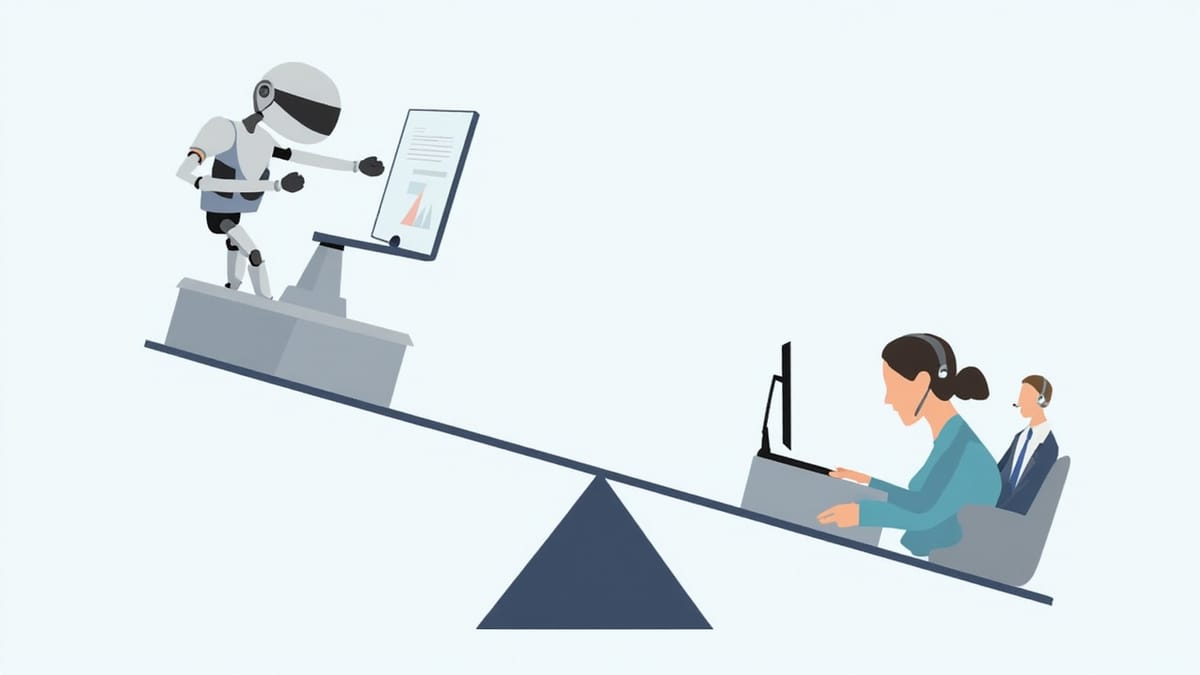
Two years ago, the question was "should we outsource QA or hire in-house?" Today, there's a third option that's changed the economics significantly: AI-powered QA services that automate test creation, execution, and monitoring without a team of human testers.
This isn't a theoretical comparison. Both approaches are in production at companies shipping software right now. Here's what the real tradeoffs look like.
What AI-Powered QA Services Actually Do
AI-powered QA services range from narrow tools to broad platforms. The key capabilities you'll see:
AI test generation: Given a URL, a feature spec, or natural language description, generate test cases automatically. Platforms like HelpMeTest let you write tests in plain English ("navigate to checkout, add item to cart, complete payment") and run them automatically.
Self-healing tests: When UI changes break test selectors, AI-powered tests adapt automatically rather than failing. This is a significant operational win — maintaining automated test suites is one of the highest costs in traditional test automation.
Visual AI testing: AI that detects unexpected visual changes (layout breaks, missing elements, color regressions) rather than requiring pixel-perfect screenshot comparisons that break with any legitimate UI change.
24/7 monitoring: Continuous health monitoring that runs tests on a schedule and alerts on failures — without a human tester polling the environment.
Exploratory AI agents: Newer capabilities where AI agents explore applications autonomously and report issues, similar to how a human tester would do exploratory testing.
What Traditional Manual QA Outsourcing Provides
Manual outsourcing agencies provide:
Human testers: People who can apply judgment, catch usability issues, notice unexpected behavior patterns, and do the kind of testing that doesn't fit a script.
Exploratory testing: Experienced testers finding bugs that no one knew to write a test case for.
Regression execution: Running test suites before releases, verifying features work as specified.
Specialized testing: Performance, security, accessibility, localization — areas requiring both specialized knowledge and human judgment.
Business logic validation: Testers who understand your domain (fintech, healthcare, e-commerce) can validate that business rules are implemented correctly, not just that the UI renders.
The Cost Comparison
This is where the shift is dramatic:
Traditional manual outsourcing:
- Entry-level managed testing service: $5,000–$8,000/month (typically 2–3 offshore testers)
- Mid-range agency: $8,000–$20,000/month
- Premium (specialized, nearshore/onshore): $20,000–$50,000/month
- Annual cost for basic coverage: $60,000–$240,000
AI-powered QA platforms:
- Basic automated coverage: $100–$500/month
- Growing teams with more tests: $500–$2,000/month
- Enterprise with custom requirements: $2,000–$10,000/month
- Annual cost: $1,200–$120,000
The 10–100x cost difference is real. But the comparison requires understanding what each provides.
Coverage: What Each Approach Does Well
Where AI-Powered QA Wins
Regression testing: Running the same tests repeatedly on a schedule is exactly what automation excels at and humans find tedious. AI-powered tests run your regression suite every hour if you want, 24/7, without fatigue, without missing test steps.
Monitoring: Production health checks, uptime monitoring, and alert triggers are pure automation territory. No manual outsourcing agency provides this at the same frequency or reliability.
Consistency: A human tester following test case step 7 ("verify the cart shows the correct total") might read it slightly differently each time, or get tired. Automated tests execute identically every run.
Breadth at scale: Once you've written the tests, running them across 5 browsers, 3 device viewports, and 10 locales is a configuration change, not a 50x time investment.
Speed: An automated test suite that took a human team 8 hours to execute manually can run in 15 minutes. This enables testing on every PR, not just before releases.
Where Manual Outsourcing Wins
True exploratory testing: A good human tester with product knowledge will find bugs in 30 minutes of exploratory testing that no automated test suite would catch — because they're doing things users do, not steps in a script.
Usability and UX issues: "This flow is confusing" is not a test case you can automate. Human testers notice when something is technically working but users will be confused.
Business logic validation: A tester who understands insurance or healthcare can verify that the correct rules are applied. AI can verify that the UI shows X; it can't easily verify that X is the correct answer for a complex regulatory context.
Novel feature testing: When you ship a new feature, you don't have test cases for it yet. Human testers can apply judgment about what to test. AI agents are improving here, but experienced human exploratory testers still have an edge for genuinely novel functionality.
Edge case discovery: The most valuable bugs are the ones you didn't know to test for. Human testers find these by combining product knowledge, experience, and judgment in ways that current AI tools can't fully replicate.
Accessibility testing: Screen reader behavior, keyboard navigation, and cognitive accessibility issues require human evaluation. Automated accessibility scanning finds structural issues; human testing finds usability ones.
Speed and Time to Value
AI-powered platforms: Write your first test in an hour. Production monitoring in a day. Full regression suite built incrementally over weeks. Time-to-first-test is fast; time-to-comprehensive-coverage depends on how much you invest.
Manual outsourcing: Contract negotiation (2–4 weeks), onboarding (4–6 weeks), ramp-up to productive testing (8–12 weeks total). But once productive, a well-ramped agency team provides coverage you can't easily automate.
For startups who need coverage now, AI platforms win on time-to-value.
Maintenance: The Hidden Cost
This is where AI-powered platforms have made the most progress and traditional automation has historically struggled.
Traditional test automation requires constant maintenance. Selectors break when developers rename CSS classes. Test flows break when navigation changes. Maintaining a large automated suite can consume as much time as creating it.
AI-powered self-healing tests reduce this dramatically. When a button's ID changes, the test adapts. When a form gets an extra field, the test still navigates through. This isn't magic — complex workflow changes still need human review — but it eliminates the majority of maintenance overhead that historically made automation teams spend 50%+ of their time maintaining existing tests.
Manual outsourcing has no maintenance cost in the same way — testers adapt to UI changes naturally. But they also don't detect when the app changes in unexpected ways; they test what they're asked to test.
The Actual Decision Framework
Choose AI-Powered QA If:
- You need 24/7 monitoring and regression testing
- You want fast time-to-coverage at low cost
- Your releases are frequent and you need testing on every PR
- Your team lacks Playwright/Selenium expertise but needs test automation
- You're a startup that can't afford a QA team but needs basic coverage
- You need multi-browser, multi-viewport, multi-locale coverage at scale
Choose Manual Outsourcing If:
- You need genuine exploratory testing from experienced testers
- Your product has complex domain logic requiring business knowledge
- You need a team that builds deep product knowledge over time
- You're preparing for a compliance audit that requires documented human testing
- You have AI tools handling regression and need humans for the judgment layer
Consider Both (The Hybrid Approach)
The most effective testing setups in 2026 use both:
AI-powered platform for:
- Continuous monitoring (runs every 5 minutes)
- Regression testing on every PR
- Multi-locale and multi-browser smoke tests
- Visual regression baselining
Manual outsourcing for:
- Pre-release exploratory testing (2–4 days before major releases)
- New feature discovery testing when shipping major features
- Quarterly security and performance assessments
- Accessibility audits
This hybrid costs less than full manual outsourcing while providing better regression and monitoring coverage. The manual testers spend their time on high-value exploratory work rather than executing regression scripts — which means better use of human judgment.
For context: a startup running HelpMeTest on usage-based pricing ($0.003/run) plus a 4-day exploratory testing engagement ($2,000–$5,000) before each major release gets better coverage than $8,000/month in ongoing manual outsourcing, at a fraction of the cost.
What AI-Powered QA Still Can't Replace
Honest assessment of current limitations:
Judgment about severity and risk: AI can find that a bug exists. Deciding whether it should block a release requires understanding business context that current AI tools don't have.
Strategic test planning: Deciding what to test, what coverage gaps matter most, and how to prioritize — this still requires experienced QA expertise.
Novel interaction patterns: Genuinely new UI paradigms that no training data includes are harder for AI to reason about correctly.
Zero-shot domain expertise: Testing a fintech trading platform correctly requires understanding how trades work. AI tools don't have that domain knowledge without explicit specification.
Interpersonal quality advocacy: A senior QA person who pushes back on a release because they believe the quality isn't there is a different thing than a test suite reporting red metrics.
The Trend Line
AI-powered QA is improving faster than manual QA practices. The capabilities available in 2026 didn't exist in 2023. The self-healing test, visual AI detection, and autonomous exploratory agent capabilities are all improving quarterly.
The trajectory suggests that in 3–5 years, AI-powered QA will handle the majority of what currently requires human testers. The remaining value of human outsourcing will concentrate in the highest-judgment activities: exploratory testing, domain validation, accessibility evaluation, and quality strategy.
Teams that build their quality infrastructure on AI-powered platforms now will be positioned well for this shift. Teams that rely entirely on manual outsourcing are building on a foundation that will need to change.
Summary
In 2026, the honest answer is: AI-powered QA services beat manual outsourcing on cost, speed, consistency, and monitoring coverage. Manual outsourcing beats AI on exploratory testing, complex domain validation, and novel feature coverage.
The winning strategy for most teams isn't choosing one — it's using AI-powered platforms as the baseline and reserving human testing resources for the high-judgment activities where experienced testers genuinely add more value than automation.
For startups specifically: start with an AI-powered platform. Add targeted manual testing as you approach significant releases. Scale to a hybrid as your product matures. This will cost less, provide faster feedback, and position you well as the AI QA capabilities continue to improve.